
Singapore Food Heritage
← Back to Food HeritageChar Kway Teow
Linked to Teochew migrants from Chaoshan in Guangdong, China, despite its Hokkien name. Some say it first appeared at Singapore's Ellenborough Market (the Teochew market) as a simple labourers' meal of rice noodles fried with lard and dark soy.
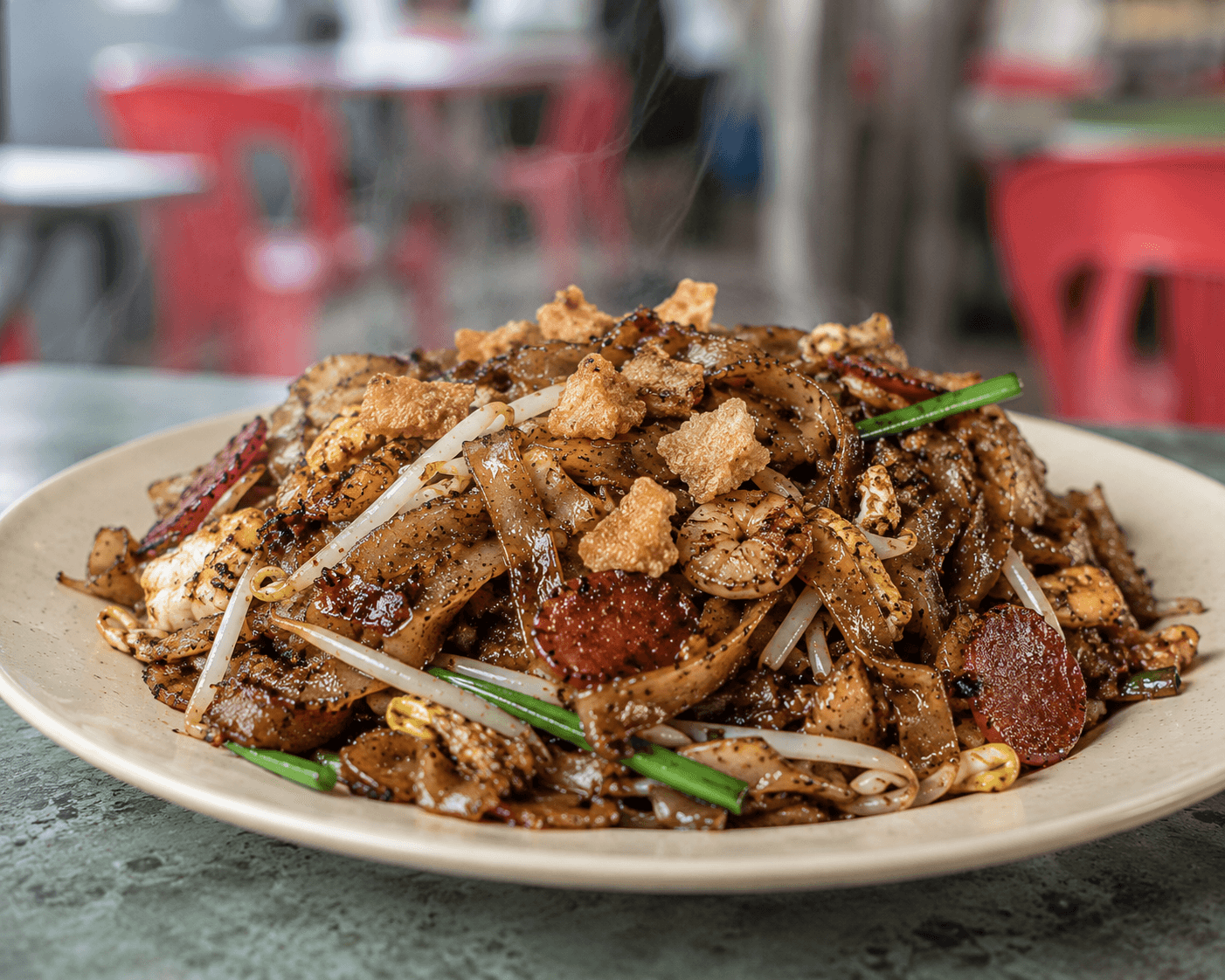
Story
Char kway teow (炒粿条, "stir-fried flat rice noodles") is one of Singapore's most beloved wok dishes: flat rice noodles and yellow noodles tossed over fierce heat with sweet dark soy, garlic, egg, bean sprouts, cockles and lap cheong, traditionally in lard. It came with Teochew migrants from the Chaoshan region of southern China and started out as a cheap, filling meal for labourers.
Shiok Factor
The hallmark is wok hei, the smoky breath of the wok that hawkers chase plate after plate
UNESCO's inscription of Singapore's hawker culture celebrates exactly this: affordable, skilled street cooking passed between generations.
🏷️ Key Ingredients
Tap any ingredient to learn its role
🥢 How to Eat Like a Local
- 1
Eat it the moment it lands; wok hei fades fast
- 2
If your plate comes with a lime wedge, squeeze it over to cut the richness
- 3
Ask for more or less chilli when you order; most Singapore stalls fry it in
- 4
Say 'no hum' if you want to skip the cockles; no judgement
- 5
Chase every few bites with cold sugar cane juice
Tap each step to highlight
How to Order · Serving #4
How to Order Char Kway Teow →
Five decisions stand between you and the perfect plate. Here's every fork, and exactly what to say at the stall.
🌡️ Shiok-O-Meter
Rated by locals, not algorithms
Spice Hit
Like drinking warm water lah
Napkin Alert
Eat with one hand, no problem
Flavour Depth
Cannot stop thinking about it
Queue Game
Worth every minute standing
Shiok Value
Money well spent
Overall Shiok Score
👍 Solid Lah
Where to Find the Best
Hong Lim Market & Food Centre (Outram Park Fried Kway Teow Mee), Old Airport Road Food Centre (Lao Fu Zi) and Bedok South Market & Food Centre (Hill Street Fried Kway Teow) are the big three, all with queues at peak hours. Look for long waits and a soot-dark wok.
Best Paired With
- Calamansi lime squeeze
- sambal on the side
- a cold sugar-cane juice to cut the richness.
Best Char Kway Teow in Singapore
Checked against recent food guides — not sponsored
- 1
Outram Park Fried Kway Teow Mee
Chinatown•Hong Lim Market & Food Centre, #02-17, 531A Upper Cross StreetFrying since 1953 and a Michelin Bib Gourmand pick. Closes mid-afternoon, so go early.
📍 Open in Maps - 2
Hill Street Fried Kway Teow
Bedok•Bedok South Market & Food Centre, #01-41, 16 Bedok South RoadStarted as a pushcart in 1961. Michelin notes queues of up to an hour.
📍 Open in Maps - 3
Lao Fu Zi Fried Kway Teow
Kallang•Old Airport Road Food Centre, #01-12, 51 Old Airport RoadMichelin Bib Gourmand, and one of the few stalls frying both black and white versions.
📍 Open in Maps
Char Kway Teow: questions people ask
What is char kway teow?
Char kway teow (炒粿条, chǎo guǒ tiáo in Mandarin) means stir-fried flat rice noodles in Hokkien. In Singapore it is flat rice noodles fried with yellow noodles over high heat with sweet dark soy sauce, garlic, egg, bean sprouts, cockles, Chinese sausage and fish cake, traditionally in lard.
Where did char kway teow originate?
Despite its Hokkien name, char kway teow is linked to the Teochew community and is believed to trace back to the Chaoshan (Chaozhou) region of Guangdong, China. Teochew migrants spread it across Southeast Asia, and some say it first appeared in Singapore at Ellenborough Market, the old Teochew market by the Singapore River, as a cheap meal for labourers.
How is Singapore char kway teow different from Penang char kway teow?
Singapore char kway teow is darker and sweeter, thanks to sweet dark soy sauce, and usually mixes flat rice noodles with yellow noodles. Penang char kway teow skips the sweet sauce, so it is lighter, drier and more savoury, often with prawns and sometimes duck egg.
Does Singapore have the best char kway teow?
It depends on which style you love. Fans of a sticky, sweet, smoky plate with cockles and lard tend to prefer Singapore's version, while those who like a lighter, savoury fry usually side with Penang. Singapore's CKT is good enough that several stalls, such as Lao Fu Zi at Old Airport Road and Outram Park Fried Kway Teow Mee at Hong Lim, hold Michelin Bib Gourmand recognition.
Is 'Singapore fried kway teow' a real Singapore dish?
Not really. On Chinese takeaway menus abroad, 'Singapore' usually means a curry-powder stir-fry, like Singapore noodles, which were created by Cantonese cooks in Hong Kong rather than in Singapore. In Singapore itself, fried kway teow means char kway teow, which has no curry powder.
Where can I find good char kway teow in Bedok?
Hill Street Fried Kway Teow at Bedok South Market & Food Centre (#01-41, 16 Bedok South Road) is the big name. It began as a pushcart in 1961 at the old Hill Street Food Centre and is now run by the founder's son, with Michelin noting waits of up to an hour; it opens Tuesday to Saturday. A separate stall, also called Hill Street Fried Kway Teow, operates at Chinatown Complex.
Is char kway teow halal?
Traditional char kway teow is not halal, because it is fried in lard and often includes Chinese pork sausage. Halal-style versions exist: 786 Char Kway Teow at Bukit Merah View Food Centre is run by a Muslim convert and uses no pork or lard, though it is not halal-certified. Read our halal hawker food guide →
Where can I eat the best char kway teow in Singapore?
Our picks are Outram Park Fried Kway Teow Mee (Chinatown), Hill Street Fried Kway Teow (Bedok) and Lao Fu Zi Fried Kway Teow (Kallang). Each one is checked against recent food guides; see the full list with addresses on this page.
How much does char kway teow cost in Singapore?
Expect to pay about S$5–8 per plate.
Is char kway teow spicy?
Moderately. Char kway teow has noticeable heat, but most people find it comfortable.
How do you eat char kway teow like a local?
Eat it the moment it lands; wok hei fades fast. If your plate comes with a lime wedge, squeeze it over to cut the richness.
Find It At These Hawker Centres
Keep Exploring
More Singapore Heritage Dishes
 None
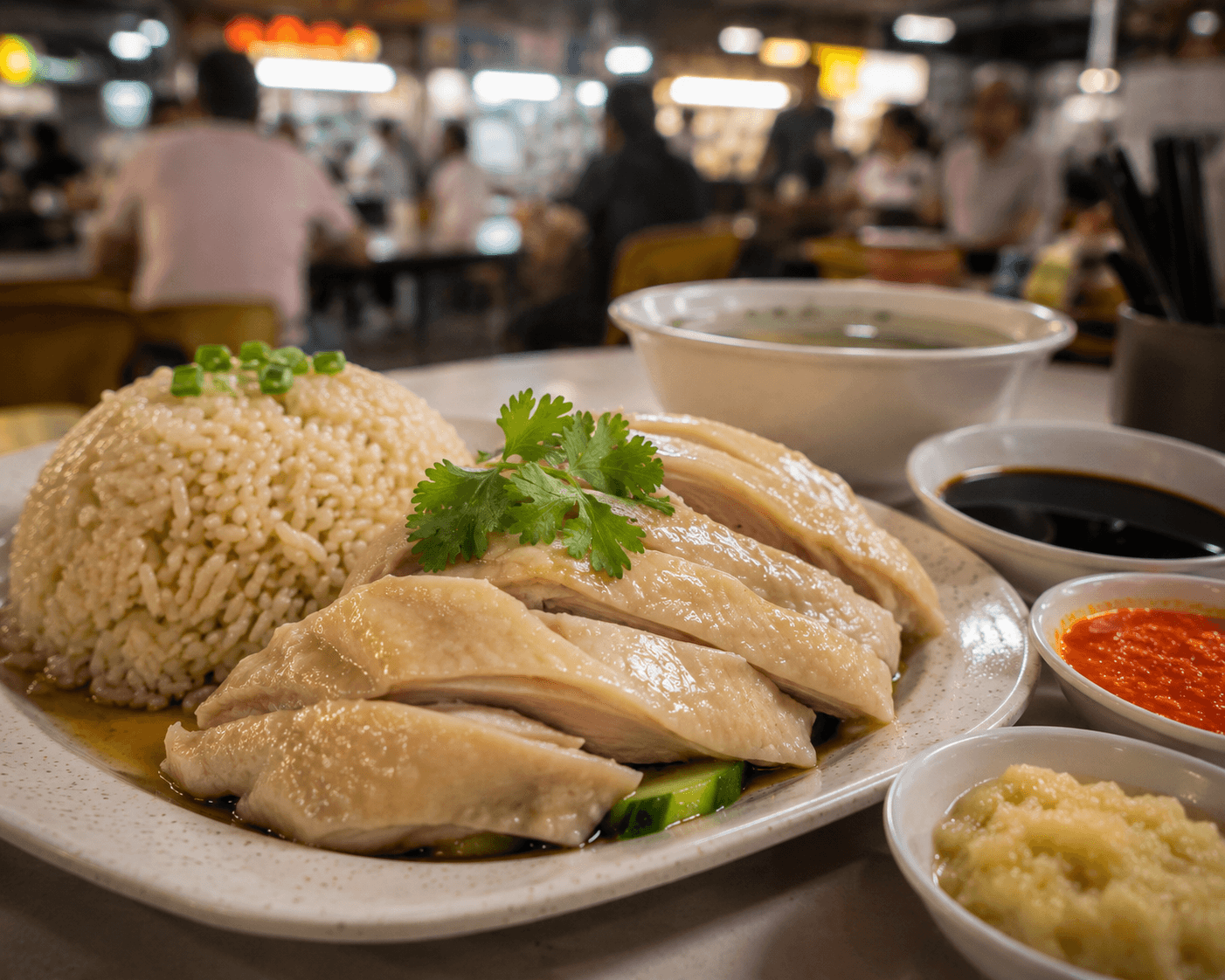
Hainanese Chicken Rice
Hainanese chicken rice began with Hainanese cooks who adapted Wenchang chicken for colonial Singapore and Malaya: poached chicken, fragra…
Explore→
 NoneHalal friendly
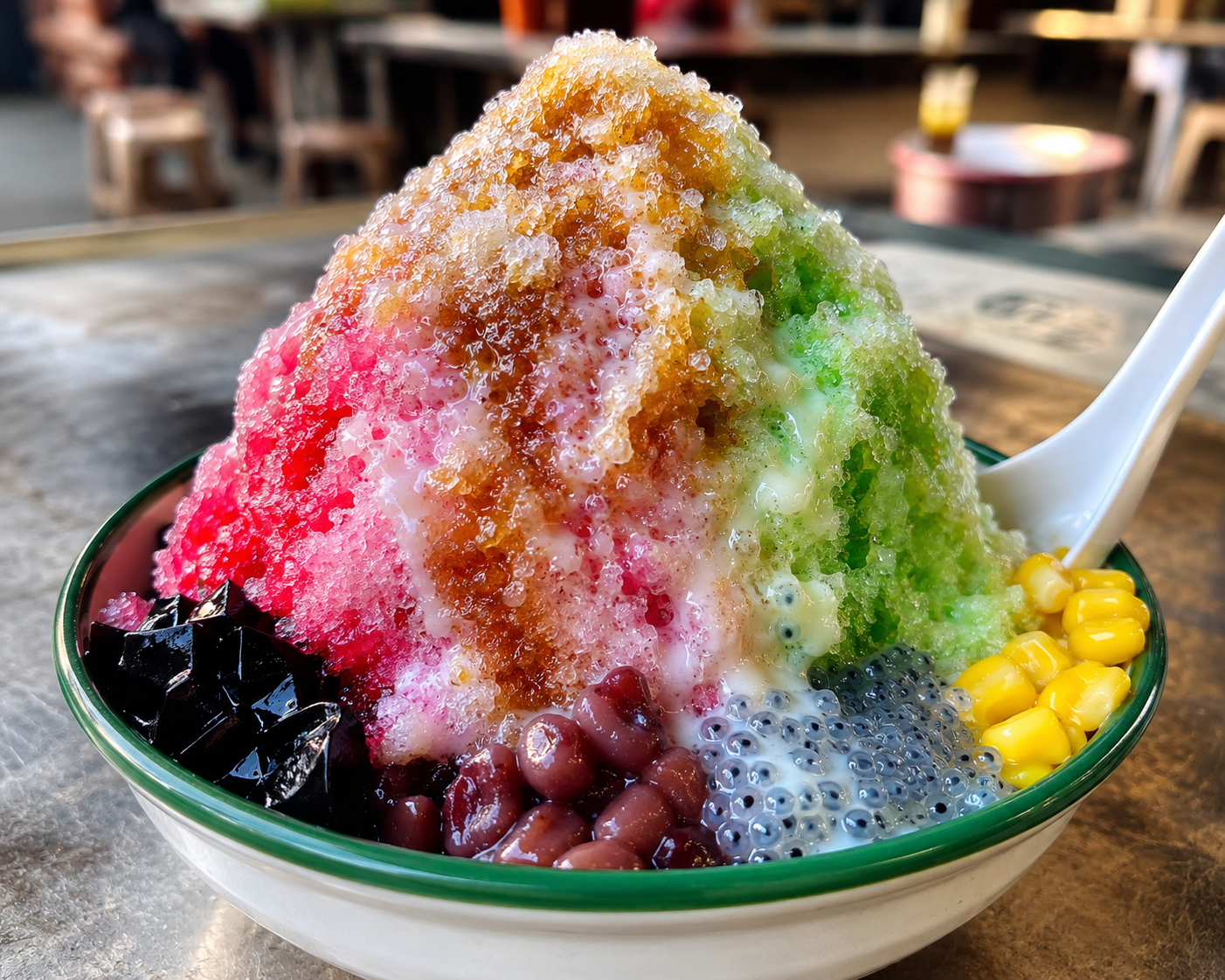
Ice Kachang
Ice kachang (ABC in Malaysia) turns the tropics into dessert: shaved ice mound, syrups, jellies, red beans, corn, attap chee, and often e…
Explore→
 None
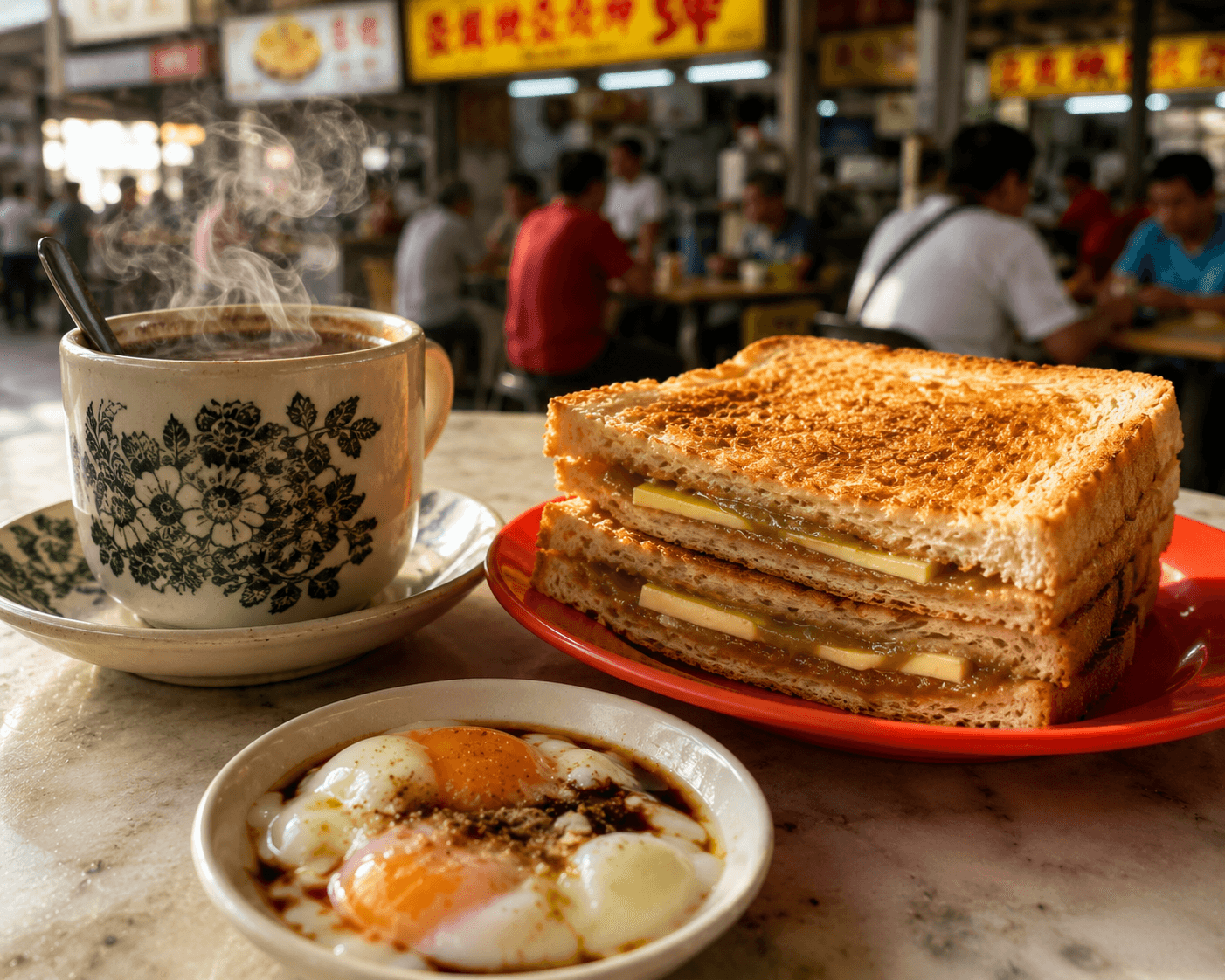
Kaya Toast
Kaya toast is breakfast diplomacy: charcoal-grilled thin bread, cold butter slabs, and kaya—a slow-cooked jam of coconut milk, eggs, and…
Explore→