
Singapore Food Heritage
← Back to Food HeritageCurry Puff
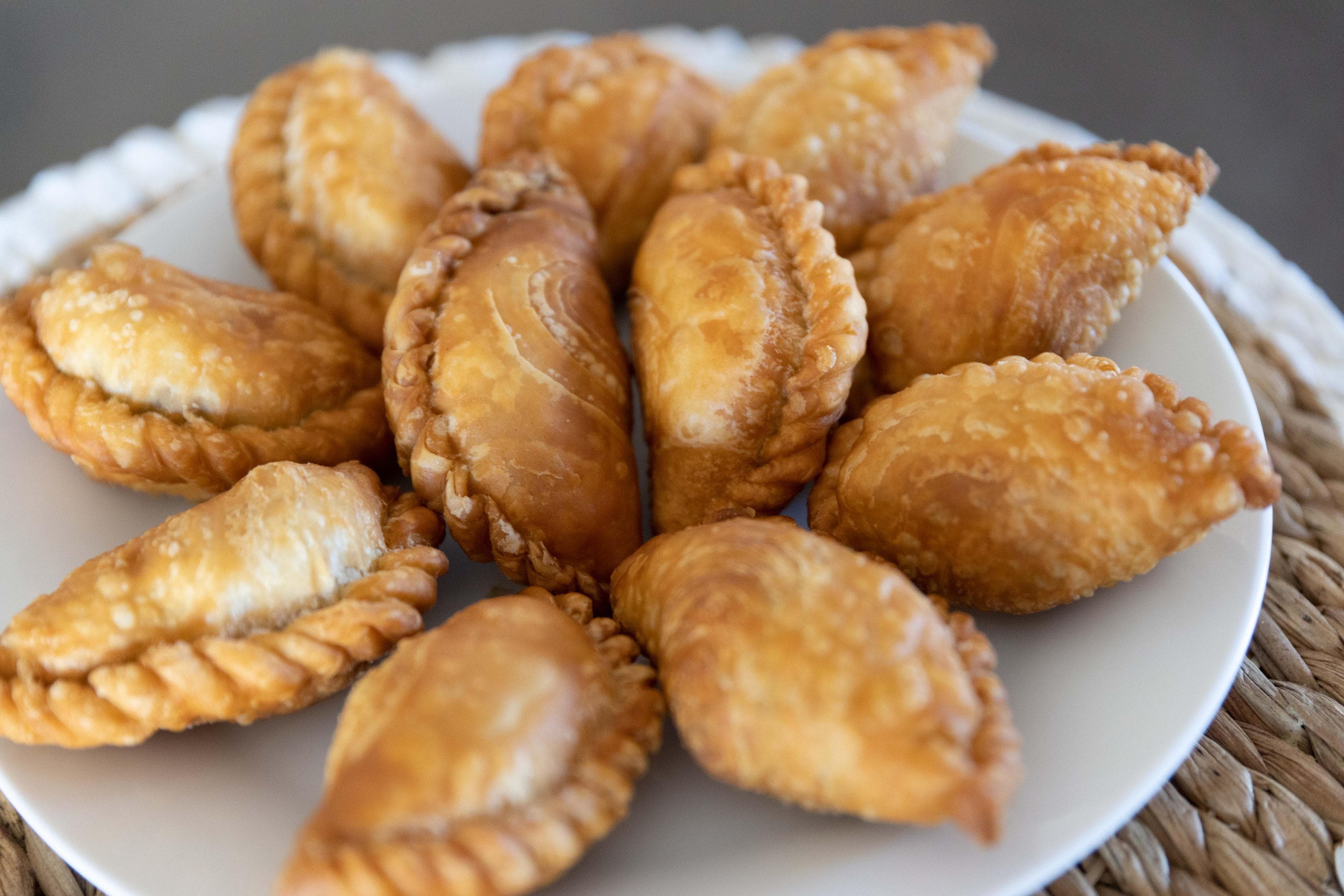
British colonial pastry tradition blended with Indian and Nyonya curry — the curry puff developed in Singapore and Malaya as a fusion snack that every community adapted into their own version.
Story
The curry puff is Singapore's most portable heritage food: a golden, crimped pastry shell filled with curried potato, onion, and chicken or egg, fried until the crust shatters and the filling is fragrant with spice.
Shiok Factor
The format came from British and Portuguese colonial pasties filtered through Indian-Muslim and Nyonya kitchen traditions — the result is something that belongs to every community in Singapore and was sold by every kind of hawker from Malay stalls to Chinese bakeries
Old Chang Kee built an empire from it. Bengawan Solo refined the Nyonya version. The best versions are still the ones where the pastry is made fresh, the curry filling is properly spiced and not too wet, and the whole thing is eaten hot from the fryer, burning your fingers slightly, which is part of the experience.
🏷️ Key Ingredients
Tap any ingredient to learn its role
🥢 How to Eat Like a Local
- 1
Eat immediately after purchase — the pastry is at its best within 10 minutes of frying and deteriorates rapidly
- 2
Bite from one end to assess the pastry-to-filling ratio before committing to the full puff
- 3
The filling should be moist but not wet — if curry seeps out immediately the filling is too liquid
- 4
Blow gently on the filling before the second bite — the inside stays hot long after the pastry cools
- 5
Judge the stall by the pastry, not the filling — good pastry that shatters when bitten is the harder achievement
Tap each step to highlight
🌡️ Shiok-O-Meter
Rated by locals, not algorithms
Spice Hit
Like drinking warm water lah
Napkin Alert
Eat with one hand, no problem
Flavour Depth
Got layers, worth exploring
Queue Game
Walk in, sit down, eat
Shiok Value
Money well spent
Overall Shiok Score
🤷 Try First, See How
Where to Find the Best
Old Chang Kee outlets island-wide for the classic version; Bengawan Solo for the Nyonya version; traditional bakeries in Chinatown and Katong for handmade pastry versions.
Best Paired With
- Kopi or teh
- eaten standing up at a stall or walking. Curry puffs do not require a seat or a plate.
Best Curry Puff in Singapore
Locally verified — not sponsored
- 1
J2 Famous Crispy Curry Puff
Beach Road•Golden Mile Food Centre, #B1-43, 505 Beach RoadMichelin Bib Gourmand. The sardine curry puff here is an unusual variation that has developed its own following — the pastry is exceptional
📍 Open in Maps - 2
Old Chang Kee
Island-wide•Multiple outlets island-wideThe original — founded in 1956 and now at over 100 locations. The curry puff here is Singapore's most recognisable and the standard by which all others are measured
📍 Open in Maps - 3
Bengawan Solo Nyonya Curry Puff
Island-wide•Multiple outlets island-wideThe Peranakan version — the pastry uses a different ratio and the filling incorporates Nyonya spicing. A completely different and equally excellent interpretation
📍 Open in Maps
Find It At These Hawker Centres
Keep Exploring
More Singapore Heritage Dishes
 Medium
Char Kway Teow
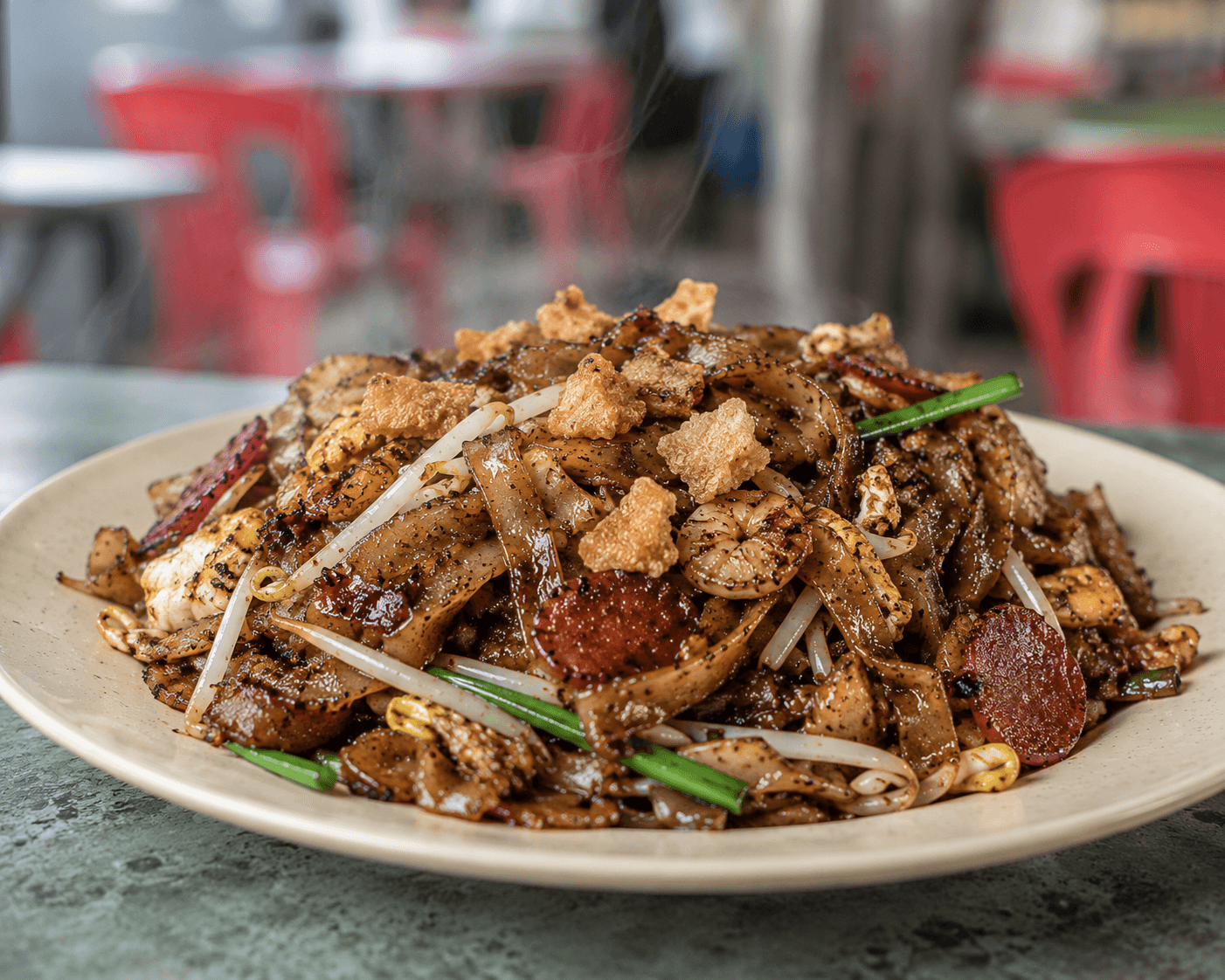
Char kway teow ("stir-fried rice cake strips") is one of Singapore's most beloved wok dishes: flat rice noodles tossed over fierce heat with dark soy, egg, bean sprouts, and seafood or lap cheong. The dish reflects the Strait Settlements era—Teochew and Hokkien traders, Southern Chinese technique, and Malaysian ingredients meeting in port cities. The hallmark is wok hei, the smoky breath of the wok that hawkers chase at dawn and supper. UNESCO's inscription of Singapore's hawker culture celebrates exactly this: affordable, skilled street cooking passed between generations. A plate of CKT is not just calories; it is living heritage on a styrofoam tray.
Explore→
 NoneHalal friendly
Hainanese Chicken Rice
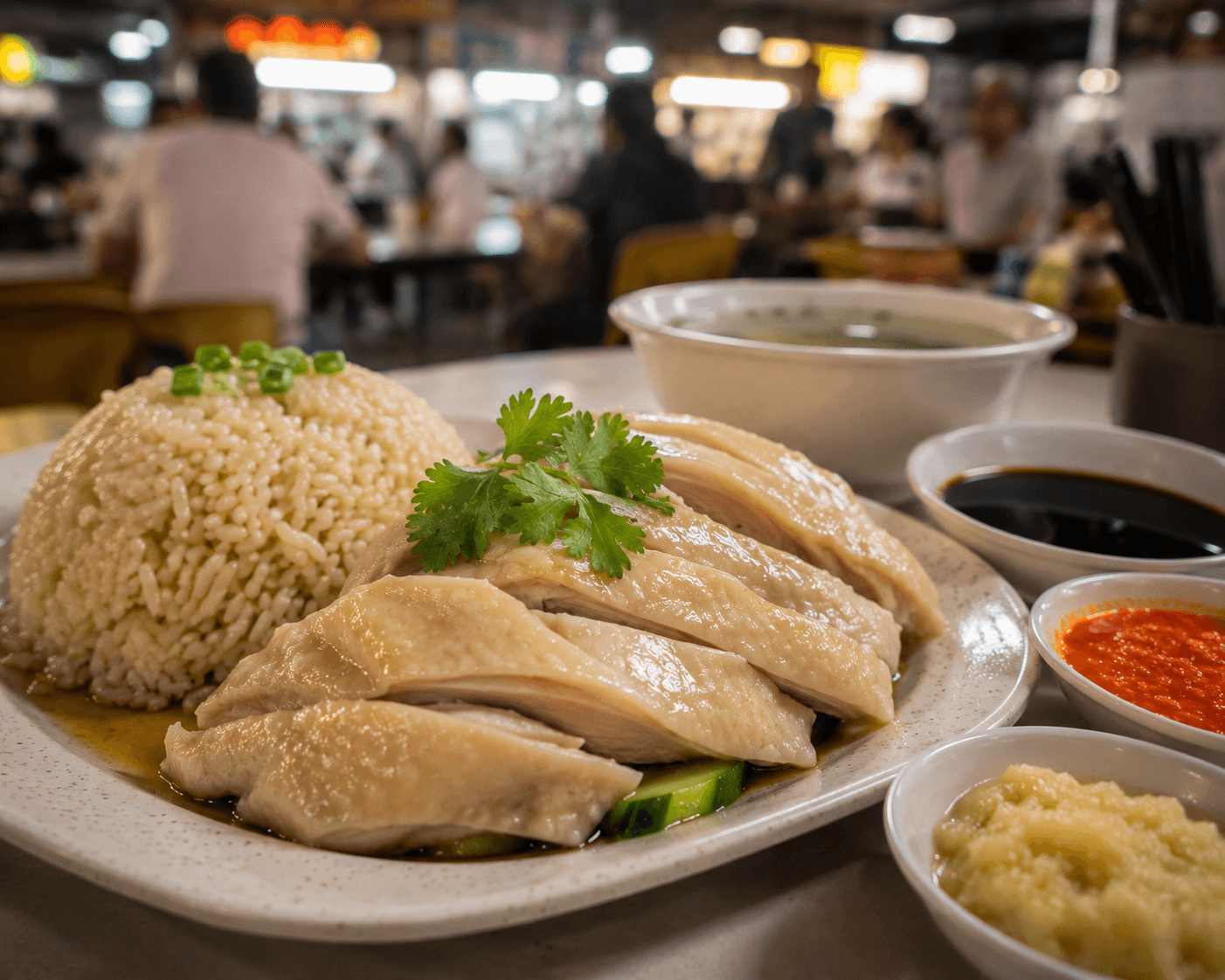
Hainanese chicken rice began with Hainanese cooks who adapted Wenchang chicken for colonial Singapore and Malaya: poached chicken, fragrant rice cooked in chicken fat and pandan, and a triumvirate of sauces—chilli, ginger, dark soy. It became the city-state's unofficial national dish because it is comforting, precise, and everywhere—from coffee shops to Michelin-listed stalls. Hawker centres guard family recipes for broth, timing of the ice bath that gives silky skin, and the exact aroma of the rice. That devotion is why chicken rice sits at the heart of Singapore's UNESCO-recognised hawker culture: technical skill, modest prices, and deep community memory.
Explore→
 HotHalal friendly
Laksa
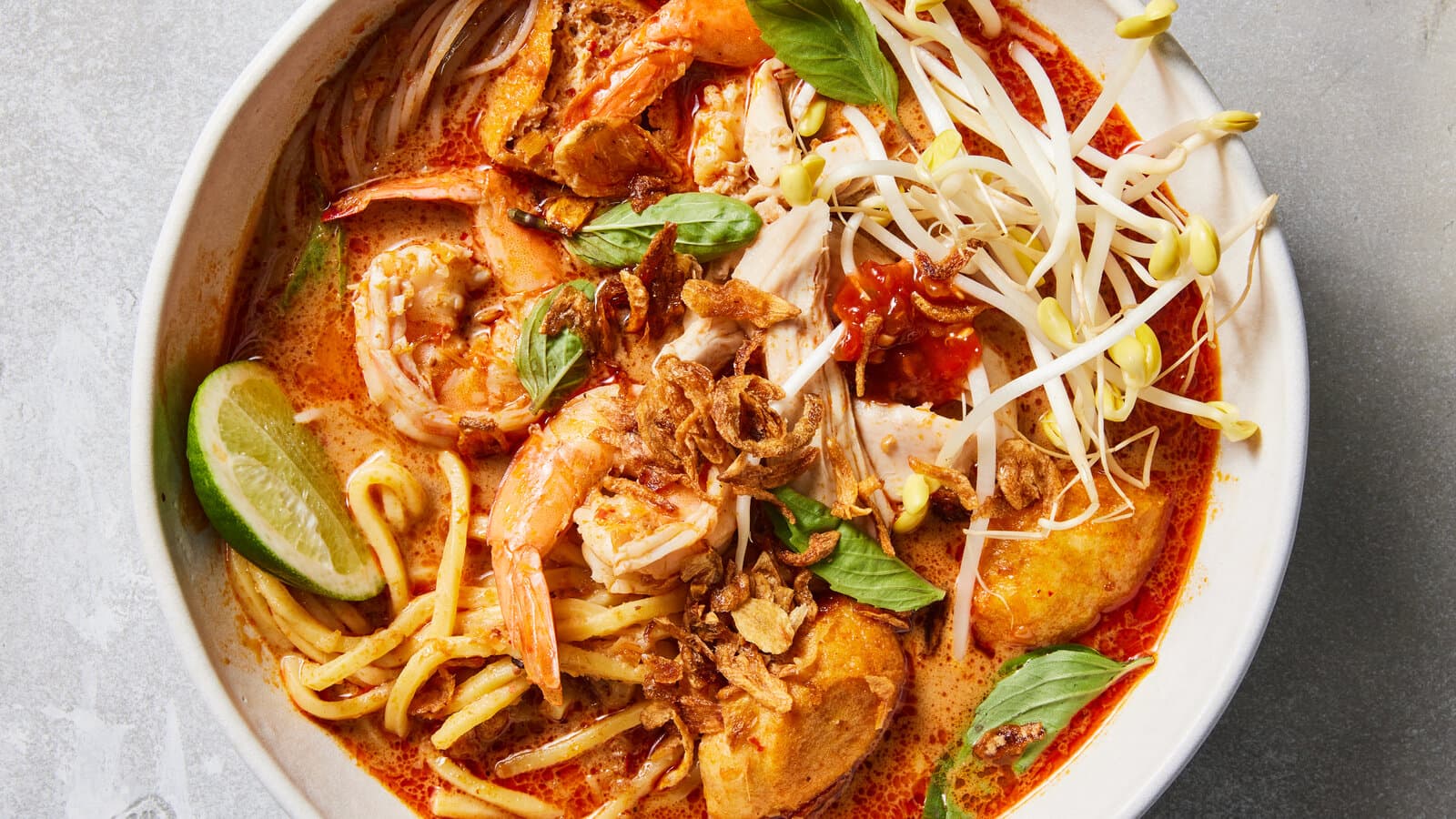
Singapore laksa usually refers to Katong-style laksa: coconut curry broth, rice vermicelli cut short for spoon-only eating, fish cake, cockles, and Vietnamese coriander (daun kesum). Peranakan kitchens merged Chinese noodles with Malay spices and rempah, producing a creamy, fiery bowl that encodes centuries of intermarriage and trade. Hawkers still pound paste by hand in some stalls; others guard slow-simmered broth that tastes of lemongrass, dried shrimp, and patience. UNESCO's hawker listing honours dishes like laksa where migrant histories are simmered into something unmistakably Singaporean.
Explore→