
Singapore Food Heritage
← Back to Food HeritageKueh Pie Tee
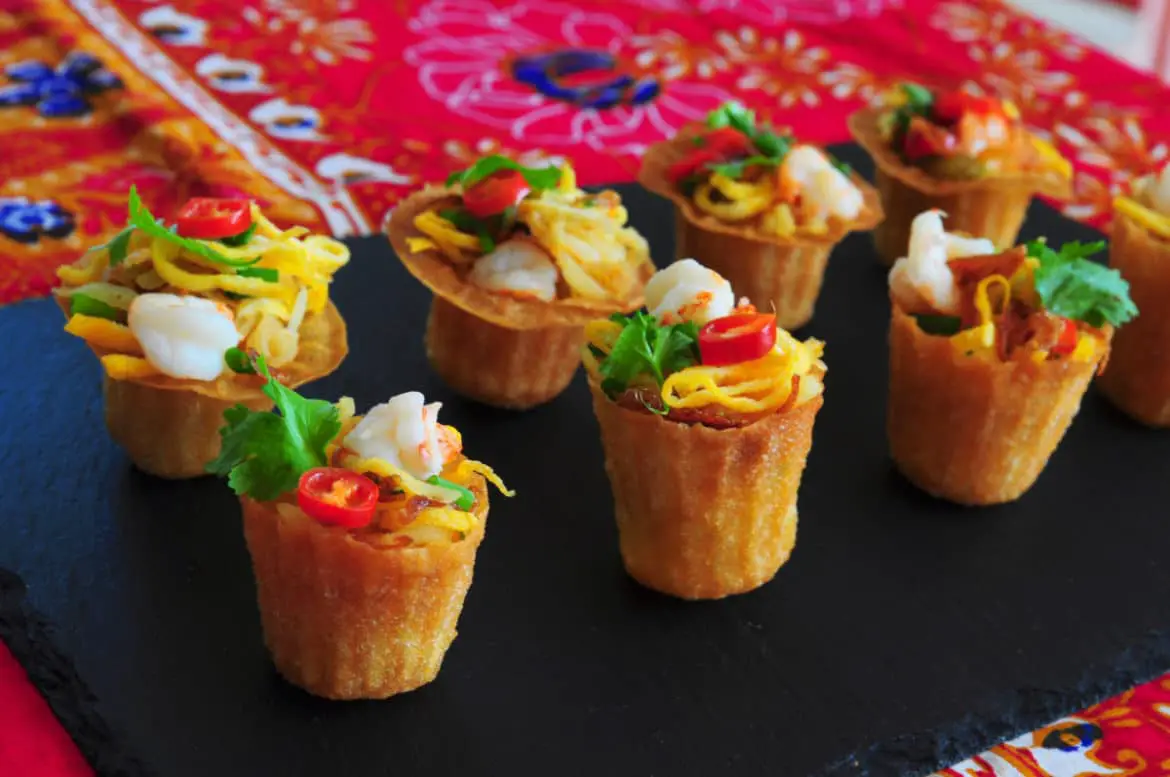
Peranakan Nyonya party food — kueh pie tee (nicknamed 'top hats' for the shape of the cups) is a distinctively Straits Chinese creation with no single immigrant ancestor.
Story
Kueh pie tee is Peranakan elegance in miniature: a thin, crispy pastry cup filled with braised jicama (bangkuang) and prawn, topped with fresh coriander, chilli sauce, and sometimes a small prawn perched on top. The cups are fried in a special mould, each one a perfect crispy vessel for the sweet, savoury filling inside.
Shiok Factor
It is a Nyonya party dish — assembled by hand, eaten in one bite, and completely impossible to eat without immediately wanting another
The contrast between the shattering pastry cup and the soft, braised filling is the entire engineering achievement of the dish.
🏷️ Key Ingredients
Tap any ingredient to learn its role
🥢 How to Eat Like a Local
- 1
Eat in one complete bite — the cup is designed to be consumed whole. Hesitating shatters it and loses the filling
- 2
Apply chilli sauce sparingly before eating — the cup holds a fixed volume and over-saucing overwhelms the delicate filling
- 3
Hold the cup from the base, not the sides — the pastry is thin and pressure from the sides cracks it before you're ready
- 4
Eat immediately after assembly — the pastry begins to soften from the filling's moisture within minutes
- 5
Order the whole plate — kueh pie tee is usually served several pieces to a plate. Attempting to share fewer than three per person creates diplomatic incidents
Tap each step to highlight
🌡️ Shiok-O-Meter
Rated by locals, not algorithms
Spice Hit
Like drinking warm water lah
Napkin Alert
Eat with one hand, no problem
Flavour Depth
Got layers, worth exploring
Queue Game
Walk in, sit down, eat
Shiok Value
Money well spent
Overall Shiok Score
🤷 Try First, See How
Where to Find the Best
Mainly at Peranakan restaurants, as a starter; it is rarely sold at hawker centres, though some Nonya kueh and popiah shops sell it for parties.
Best Paired With
- A glass of lime juice or cold barley water — the freshness complements the sweet braised filling and the crispy pastry.
Best Kueh Pie Tee in Singapore
Checked against recent food guides — not sponsored
- 1
Candlenut
Dempsey•17A Dempsey Road (COMO Dempsey)Michelin-starred (2026) Peranakan restaurant; kueh pie tee features among its starters and on its tasting menus.
📍 Open in Maps - 2
Violet Oon Singapore
Dempsey•7 Dempsey Road, #01-05Its kuay pie tee is a signature, with the turnip filling braised in prawn stock; also served at the ION Orchard outlet.
📍 Open in Maps - 3
The Blue Ginger
Tanjong Pagar•97 Tanjong Pagar RoadLong-running Bib Gourmand-listed Peranakan shophouse restaurant; the kueh pie tee is a staple starter here.
📍 Open in Maps
Kueh Pie Tee: questions people ask
Where can I eat the best kueh pie tee in Singapore?
Our picks are Candlenut (Dempsey), Violet Oon Singapore (Dempsey) and The Blue Ginger (Tanjong Pagar). Each one is checked against recent food guides; see the full list with addresses on this page.
How much does kueh pie tee cost in Singapore?
Expect to pay about S$10–20 per plate (a few pieces) at Peranakan restaurants; prices vary by outlet.
Is kueh pie tee spicy?
Only mildly. Kueh pie tee has a gentle warmth rather than real heat.
How do you eat kueh pie tee like a local?
Eat in one complete bite — the cup is designed to be consumed whole. Hesitating shatters it and loses the filling. Apply chilli sauce sparingly before eating — the cup holds a fixed volume and over-saucing overwhelms the delicate filling.
Keep Exploring
More Singapore Heritage Dishes
 Hot
Laksa
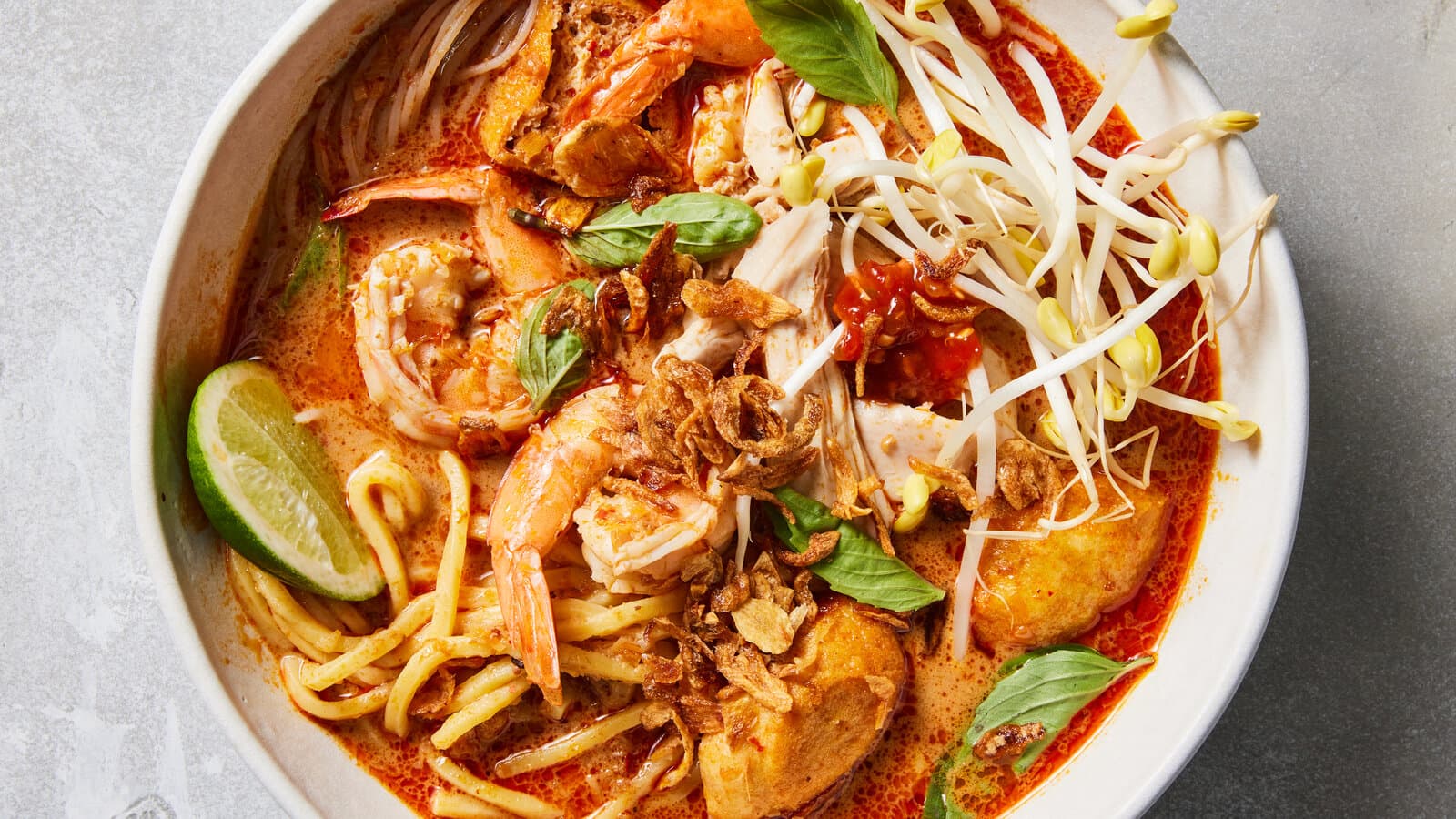
Singapore laksa usually refers to Katong-style laksa: coconut curry broth, rice vermicelli cut short for spoon-only eating, fish cake, co…
Explore→
 NoneHalal friendly
Bobo Cha Cha
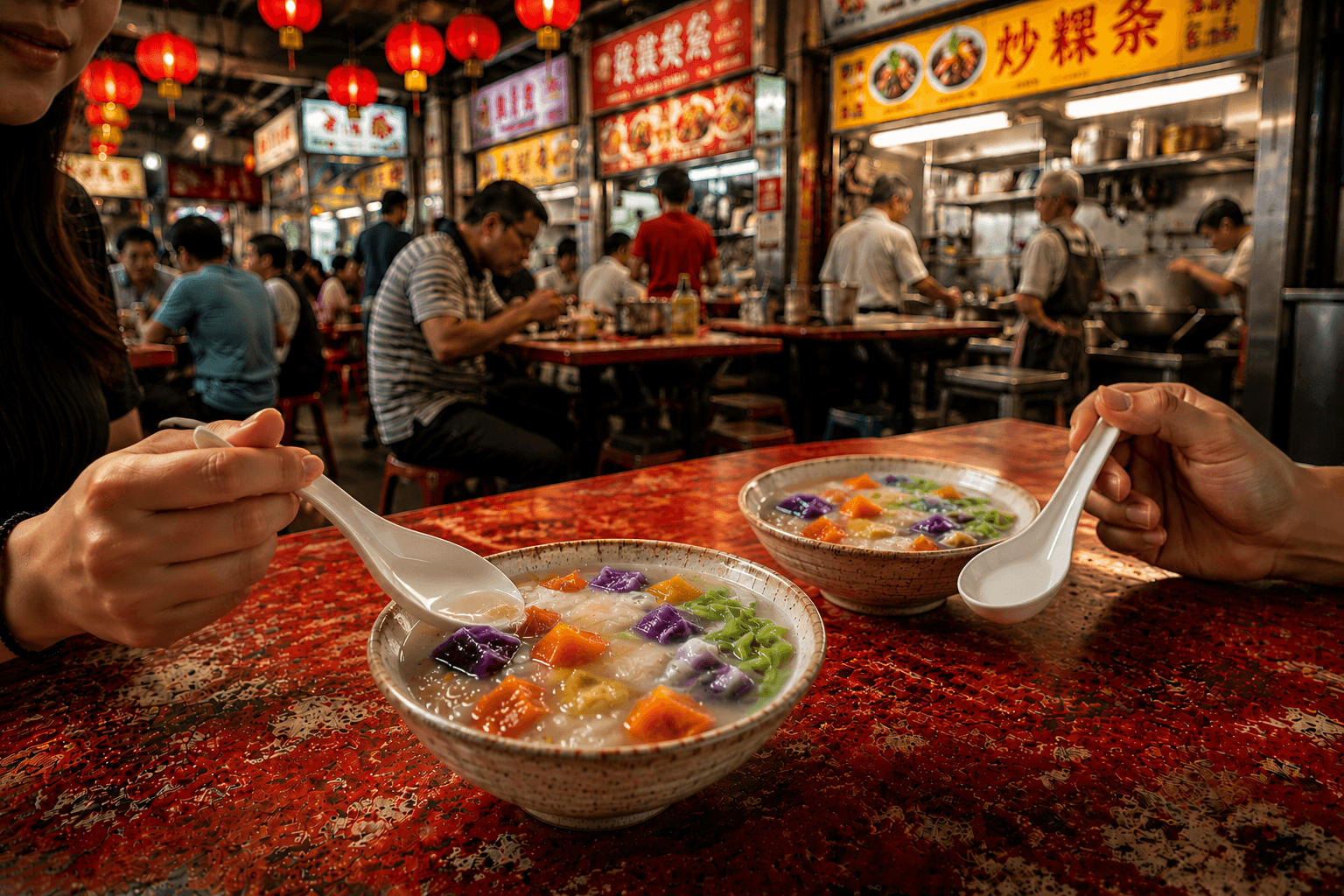
Bobo cha cha is dessert soup as comfort: yam, sweet potato, tapioca pearls, and sometimes banana swimming in coconut milk sweetened gentl…
Explore→
 Medium
Ayam Buah Keluak
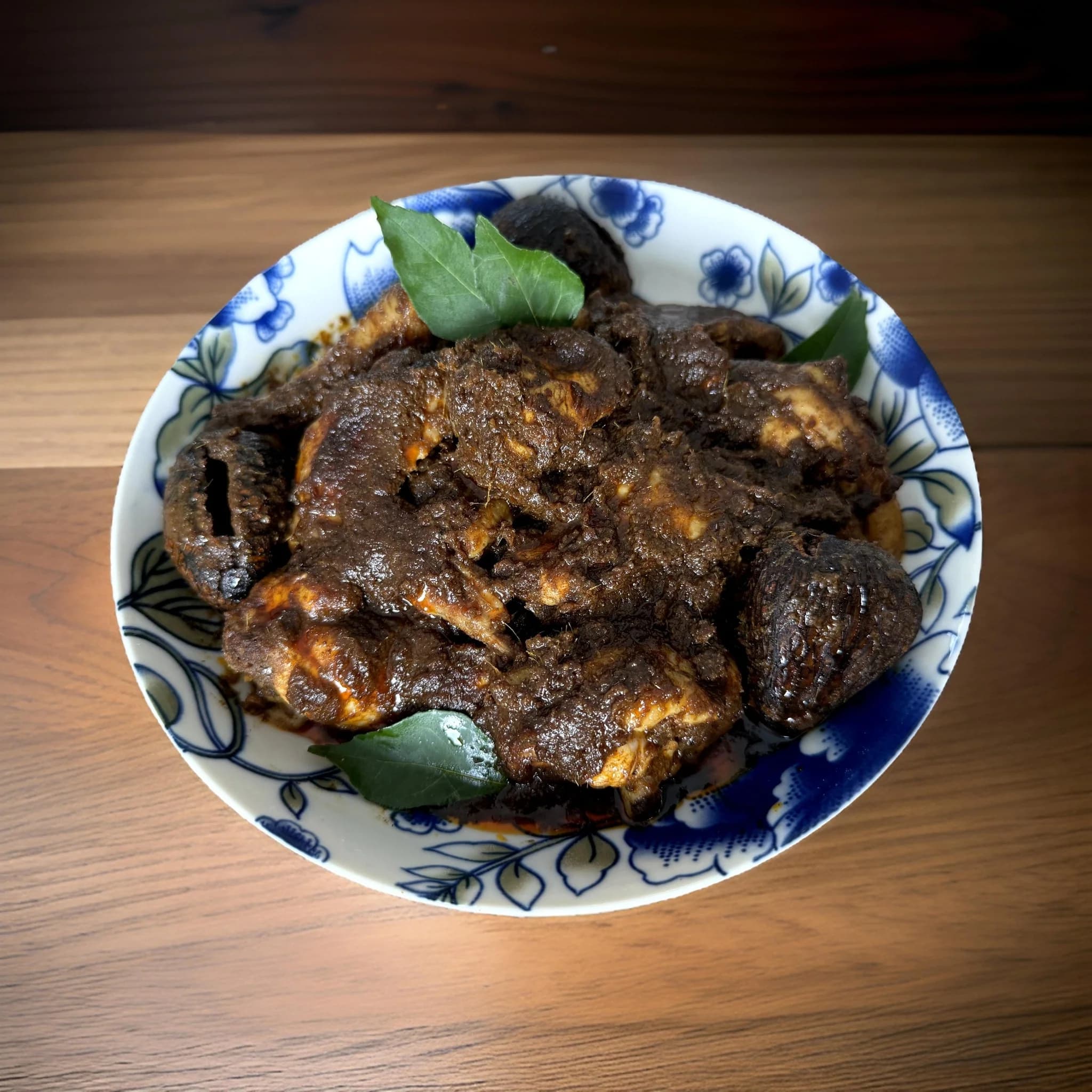
Ayam buah keluak is the dish that defines Peranakan cuisine in Singapore: chicken braised in a dark, earthy rempah with buah keluak — Ind…
Explore→