
Singapore Food Heritage
← Back to Food HeritageRoti John
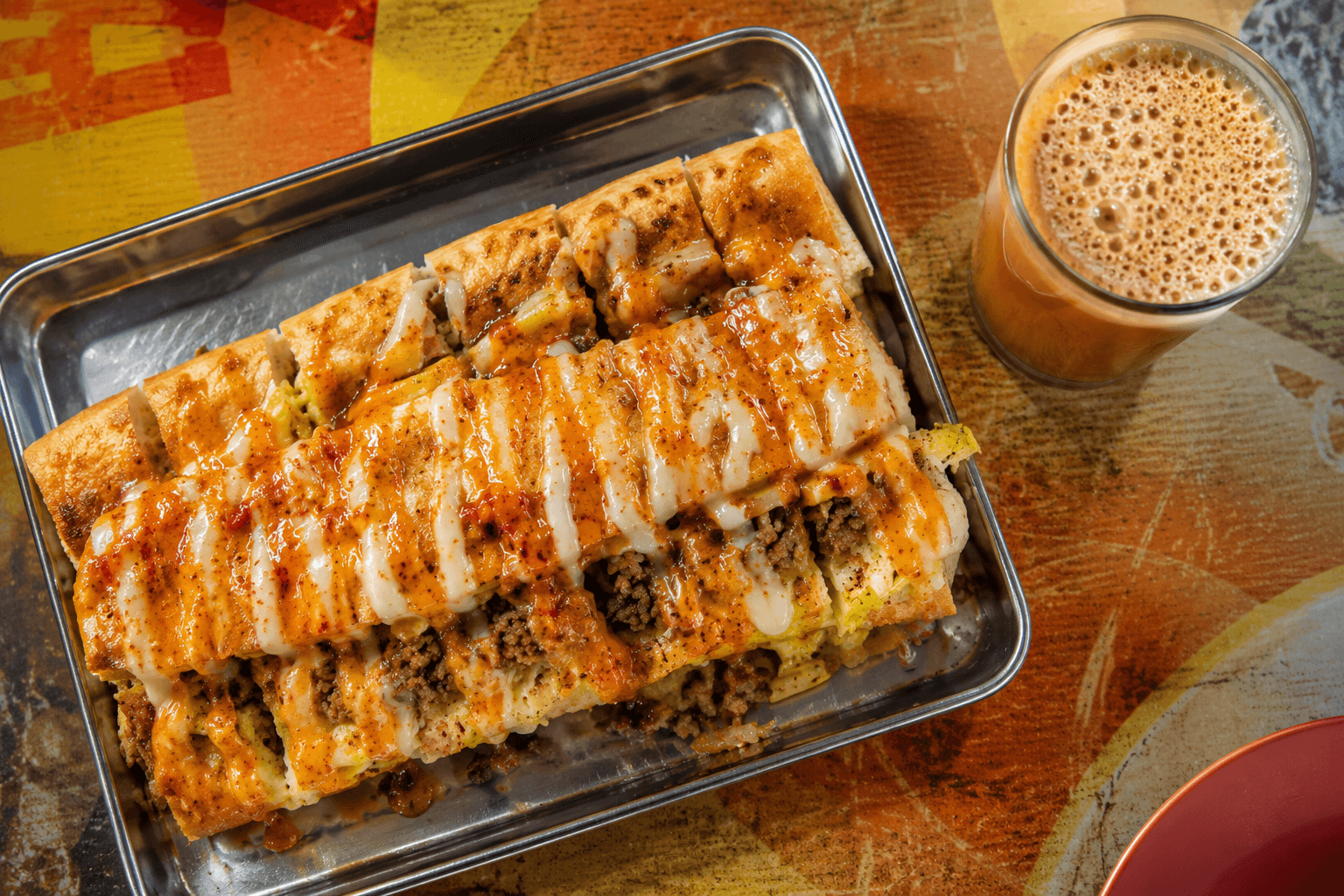
Invented by Malay hawkers in Singapore in the 1960s–70s — a deliberate fusion of Western baguette and local Malay egg-and-meat cooking, named for its European customers.
Story
Roti John is Singapore's original fusion — a French baguette (the 'roti') fried egg-and-minced-meat side down on a griddle, sliced open, and loaded with sambal, mayonnaise, and sometimes cheese. The dish was created by Malay hawkers in the 1970s who called it 'John' after the British and European customers who asked for a local sandwich. The resulting creation belongs to no single cuisine and is entirely Singaporean.
Shiok Factor
Late-night hawker markets, Ramadan bazaars, and Malay food stalls serve it as supper: messy, filling, and satisfying in a way that nothing healthy ever quite manages
🏷️ Key Ingredients
Tap any ingredient to learn its role
🥢 How to Eat Like a Local
- 1
Eat immediately — the bread goes from crispy to soggy within minutes as the egg and sambal soak in
- 2
Ask for extra sambal and mayonnaise on the side rather than having it pre-loaded — you control the ratio
- 3
Hold it with both hands and eat from one end — roti john is not a utensil dish
- 4
The egg crust on the bottom should be slightly crispy and slightly charred — if it's pale the griddle wasn't hot enough
- 5
Order with mutton or beef if available — the minced meat version is the original and best interpretation
Tap each step to highlight
🌡️ Shiok-O-Meter
Rated by locals, not algorithms
Spice Hit
Like drinking warm water lah
Napkin Alert
Eat with one hand, no problem
Flavour Depth
Got layers, worth exploring
Queue Game
Walk in, sit down, eat
Shiok Value
Money well spent
Overall Shiok Score
🤷 Try First, See How
Where to Find the Best
Geylang Serai Ramadan Bazaar for the definitive version; Adam Road Food Centre late at night; most Malay-run hawker stalls that operate into the evening.
Best Paired With
- Teh tarik or sugarcane juice
- nothing more — roti john is a complete meal that needs no accompaniment.
Best Roti John in Singapore
Locally verified — not sponsored
- 1
Ramadan Bazaar Roti John Stalls
Geylang Serai•Geylang Serai Market, 1 Geylang Serai (Ramadan only)During Ramadan the bazaar outside Geylang Serai becomes Singapore's best roti john destination — queues form before iftar
📍 Open in Maps - 2
Adam Road Roti John
Bukit Timah•Adam Road Food Centre, #01-02, 2 Adam RoadLate-night institution — opens when the satay and nasi lemak crowd peaks. The mutton version is the one to order
📍 Open in Maps - 3
Selera Rasa Roti John
Bedok•Bedok 85 Fengshan Market, 85 Bedok North St 4East-side late-night staple — griddled hard and loaded generously. Best after 10pm when the supper crowd arrives
📍 Open in Maps
Find It At These Hawker Centres
Keep Exploring
More Singapore Heritage Dishes
 Medium
Char Kway Teow
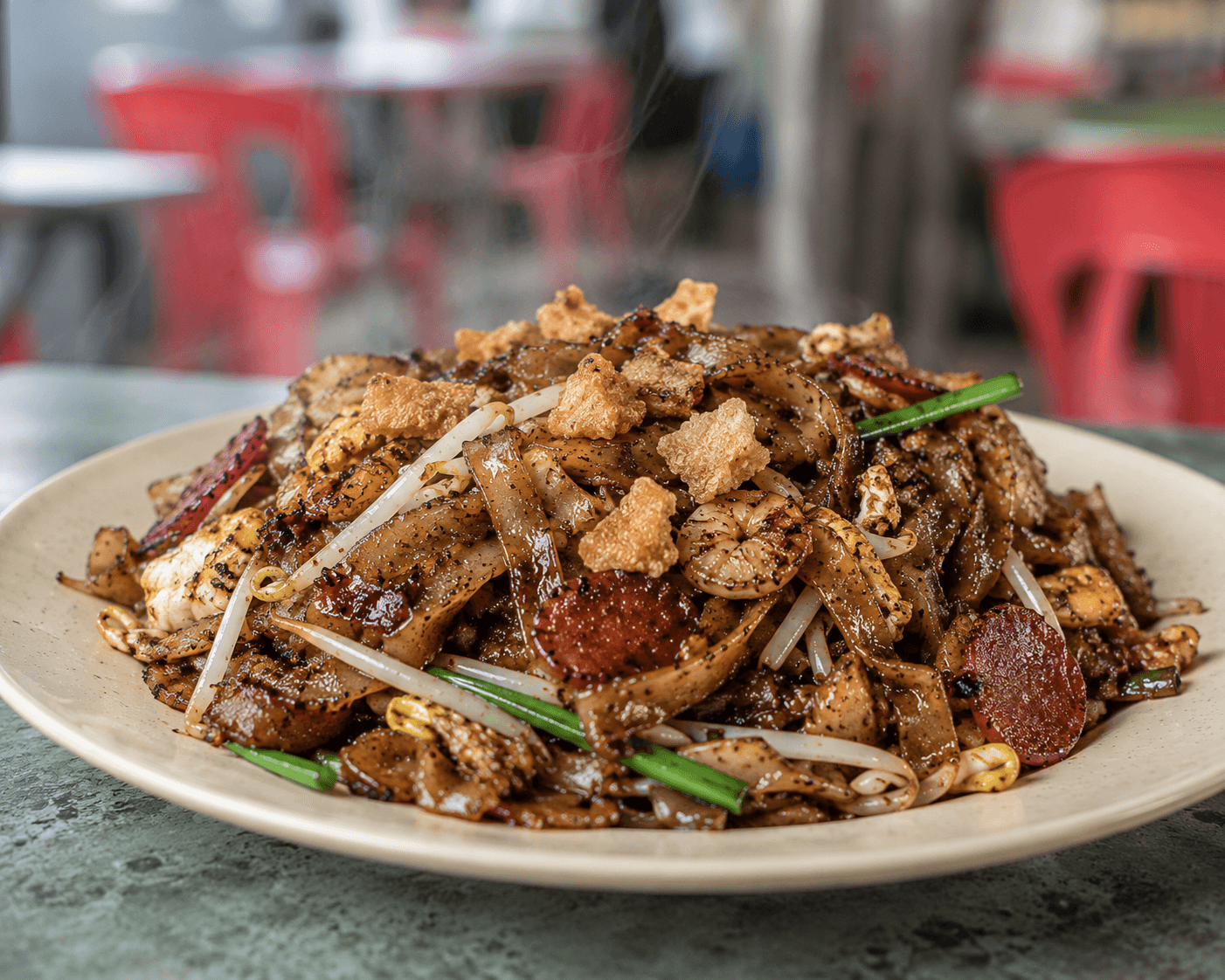
Char kway teow ("stir-fried rice cake strips") is one of Singapore's most beloved wok dishes: flat rice noodles tossed over fierce heat with dark soy, egg, bean sprouts, and seafood or lap cheong. The dish reflects the Strait Settlements era—Teochew and Hokkien traders, Southern Chinese technique, and Malaysian ingredients meeting in port cities. The hallmark is wok hei, the smoky breath of the wok that hawkers chase at dawn and supper. UNESCO's inscription of Singapore's hawker culture celebrates exactly this: affordable, skilled street cooking passed between generations. A plate of CKT is not just calories; it is living heritage on a styrofoam tray.
Explore→
 NoneHalal friendly
Hainanese Chicken Rice
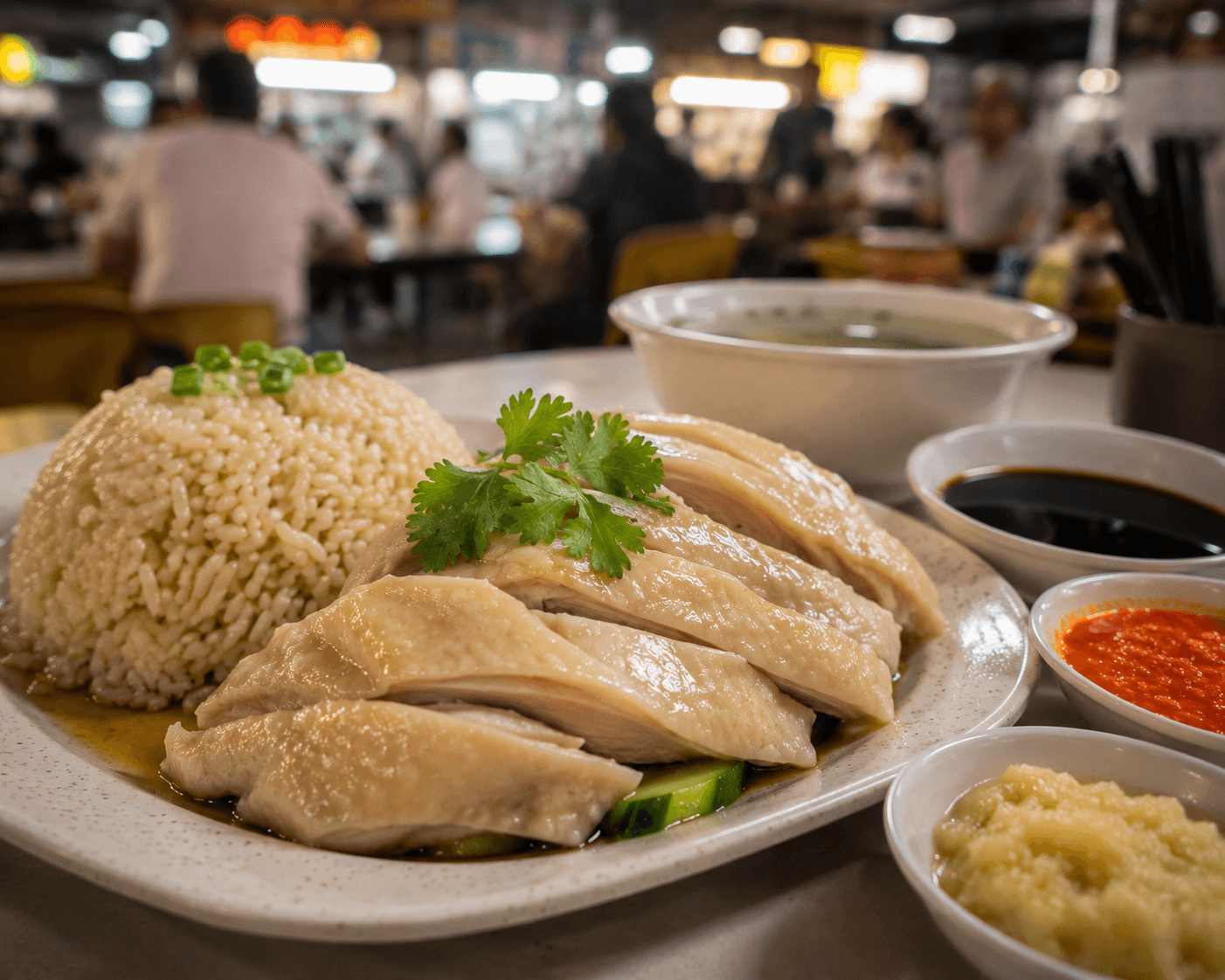
Hainanese chicken rice began with Hainanese cooks who adapted Wenchang chicken for colonial Singapore and Malaya: poached chicken, fragrant rice cooked in chicken fat and pandan, and a triumvirate of sauces—chilli, ginger, dark soy. It became the city-state's unofficial national dish because it is comforting, precise, and everywhere—from coffee shops to Michelin-listed stalls. Hawker centres guard family recipes for broth, timing of the ice bath that gives silky skin, and the exact aroma of the rice. That devotion is why chicken rice sits at the heart of Singapore's UNESCO-recognised hawker culture: technical skill, modest prices, and deep community memory.
Explore→
 HotHalal friendly
Laksa
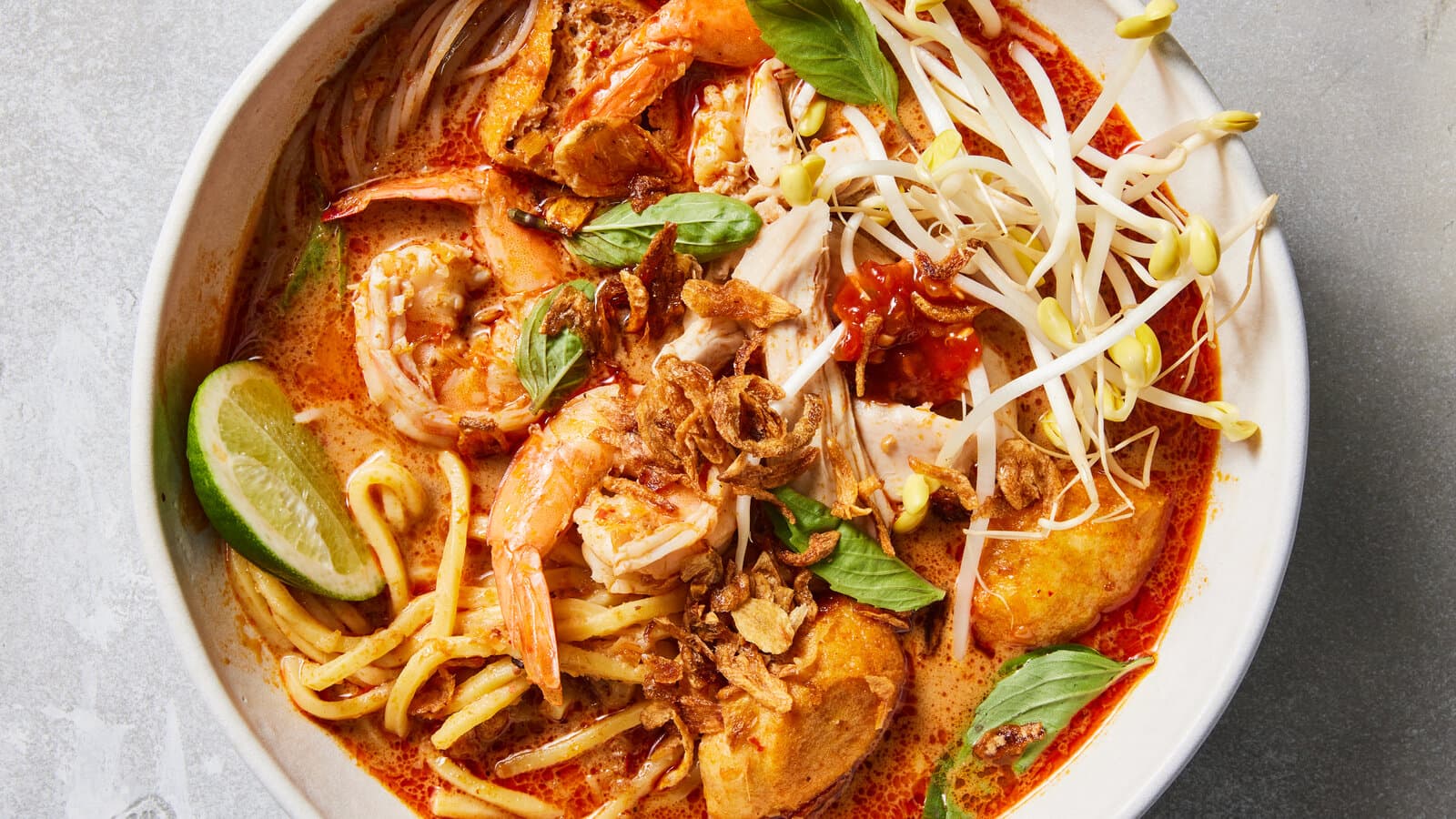
Singapore laksa usually refers to Katong-style laksa: coconut curry broth, rice vermicelli cut short for spoon-only eating, fish cake, cockles, and Vietnamese coriander (daun kesum). Peranakan kitchens merged Chinese noodles with Malay spices and rempah, producing a creamy, fiery bowl that encodes centuries of intermarriage and trade. Hawkers still pound paste by hand in some stalls; others guard slow-simmered broth that tastes of lemongrass, dried shrimp, and patience. UNESCO's hawker listing honours dishes like laksa where migrant histories are simmered into something unmistakably Singaporean.
Explore→