
Singapore Food Heritage
← Back to Food HeritageSugarcane Juice
Chinese immigrant tradition from Fujian and Guangdong provinces — fresh sugarcane pressing arrived in Singapore with the first waves of Hokkien and Cantonese settlers and became a permanent fixture of the hawker landscape.
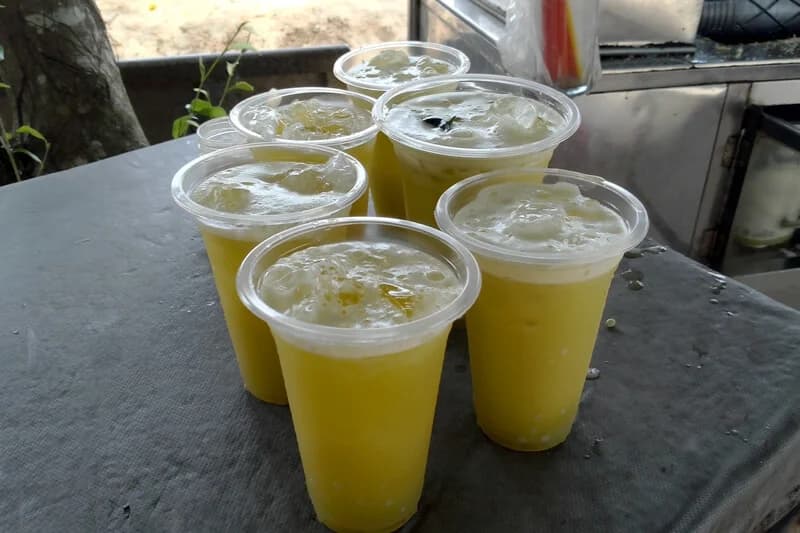
Story
Sugarcane juice is Singapore's oldest thirst-quencher: fresh cane stalks fed through a cold-pressed machine, producing a pale green liquid that is sweet, slightly grassy, and cut with calamansi or lemon.
Shiok Factor
Street vendors pressed it on wooden carts from the 1900s — Chinese immigrants brought the sugarcane pressing tradition from Fujian and Guangdong, where fresh cane juice was already a market staple
Today, sugarcane stalls are present in almost every hawker centre and wet market, the machine grinding and pressing continuously from morning until the last queue disperses. After a plate of laksa or a messy chilli crab, a glass of cold sugarcane juice is not a dessert — it is a necessity. The sweetness is the natural sugar of the cane, undiluted and unmistakable.
🏷️ Key Ingredients
Tap any ingredient to learn its role
🥢 How to Eat Like a Local
- 1
Drink immediately after pressing — sugarcane juice oxidises quickly and loses its freshness within 30 minutes
- 2
Ask for extra calamansi if you prefer more acidity — the citrus brightens the natural sweetness and is a personal preference
- 3
Drink alongside spicy food rather than after — the contrast is more effective and satisfying mid-meal
- 4
Order with less ice if you want the full cane flavour — ice dilutes the juice as it melts
- 5
The last sip from the bottom of the cup is always the sweetest — the unmelted ice has not yet diluted it
Tap each step to highlight
🌡️ Shiok-O-Meter
Rated by locals, not algorithms
Spice Hit
Like drinking warm water lah
Napkin Alert
Eat with one hand, no problem
Flavour Depth
Simple, honest, decent lah
Queue Game
Walk in, sit down, eat
Shiok Value
Best dollar spent in Singapore
Overall Shiok Score
🤷 Try First, See How
Where to Find the Best
Every hawker centre and wet market in Singapore has a sugarcane juice stall or cart. Tekka Centre and Geylang Serai for the freshest daytime versions; any hawker centre after a spicy meal for the most satisfying version.
Best Paired With
- Laksa
- chilli crab
- rojak
- or any dish that leaves a lingering heat or richness. Sugarcane juice resets the palate with a completeness that water cannot match.
Best Sugarcane Juice in Singapore
Locally verified — not sponsored
- 1
Lim Kee Sugarcane
Little India•Tekka Centre, #01-290, 665 Buffalo RoadHigh-volume stall that presses cane continuously — the freshness is guaranteed because the juice never sits long enough to oxidise
📍 Open in Maps - 2
Geylang Serai Sugarcane
Geylang Serai•Geylang Serai Market, 1 Geylang SeraiThe daytime market version — pressed fresh throughout the morning and the best accompaniment to the nasi lemak and mee siam stalls nearby
📍 Open in Maps - 3
Maxwell Sugarcane
Tanjong Pagar•Maxwell Food Centre, 1 Kadayanallur StThe CBD version — the lunchtime queue for sugarcane at Maxwell reflects how essential it is after the hawker centre's spicier dishes
📍 Open in Maps
Find It At These Hawker Centres
Keep Exploring
More Singapore Heritage Dishes
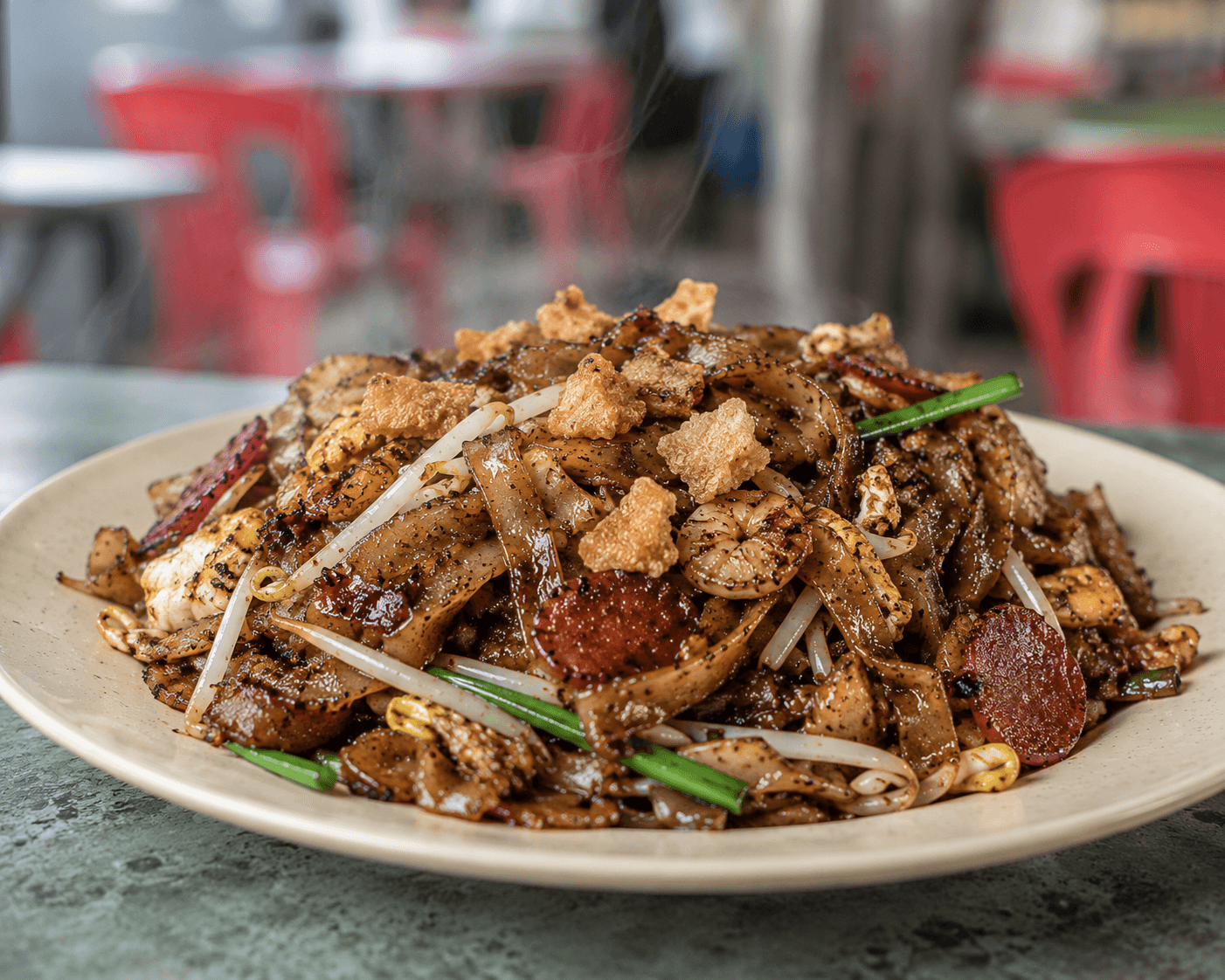 Medium
Char Kway Teow
Char kway teow ("stir-fried rice cake strips") is one of Singapore's most beloved wok dishes: flat rice noodles tossed over fierce heat with dark soy, egg, bean sprouts, and seafood or lap cheong. The dish reflects the Strait Settlements era—Teochew and Hokkien traders, Southern Chinese technique, and Malaysian ingredients meeting in port cities. The hallmark is wok hei, the smoky breath of the wok that hawkers chase at dawn and supper. UNESCO's inscription of Singapore's hawker culture celebrates exactly this: affordable, skilled street cooking passed between generations. A plate of CKT is not just calories; it is living heritage on a styrofoam tray.
Explore→
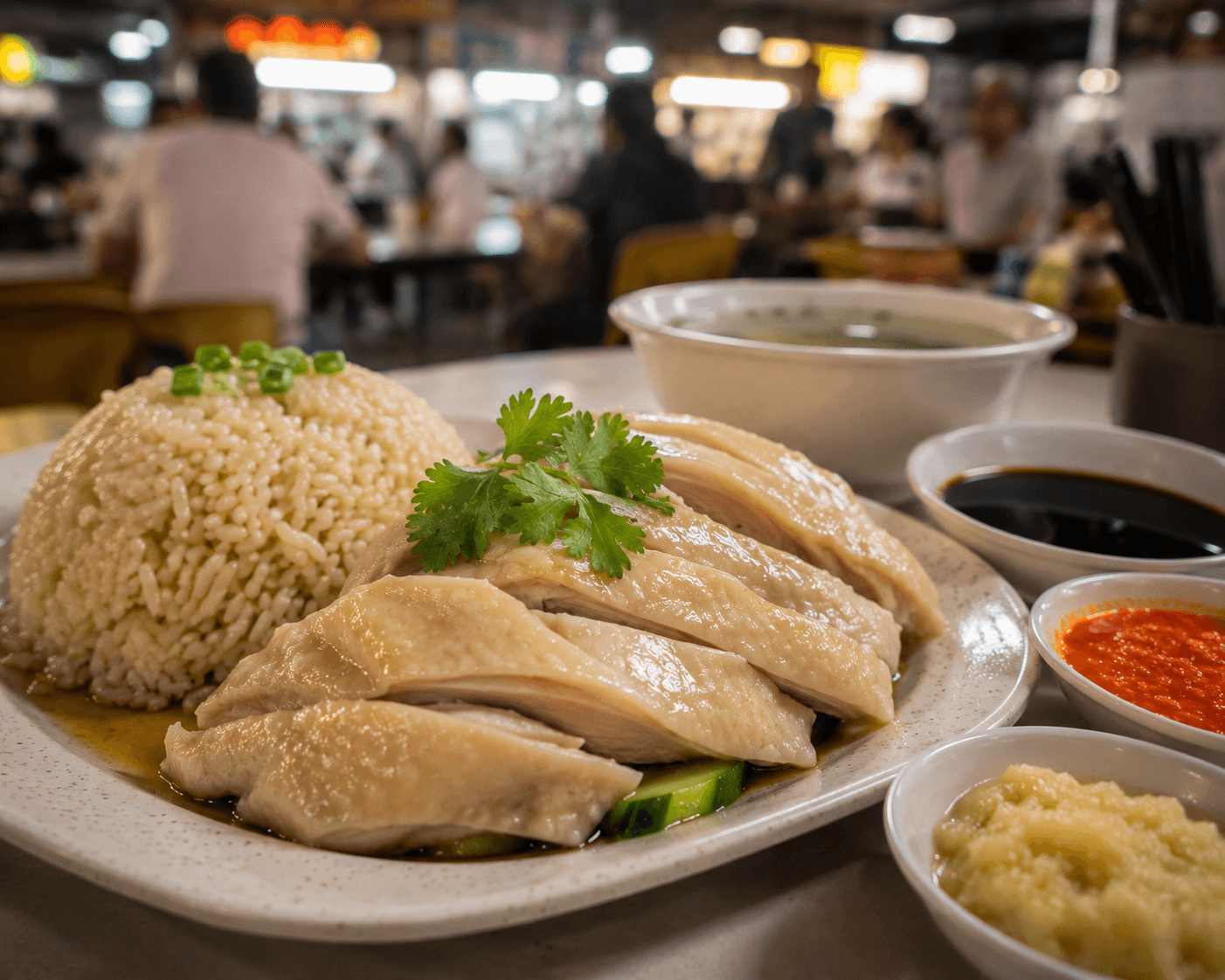 NoneHalal friendly
Hainanese Chicken Rice
Hainanese chicken rice began with Hainanese cooks who adapted Wenchang chicken for colonial Singapore and Malaya: poached chicken, fragrant rice cooked in chicken fat and pandan, and a triumvirate of sauces—chilli, ginger, dark soy. It became the city-state's unofficial national dish because it is comforting, precise, and everywhere—from coffee shops to Michelin-listed stalls. Hawker centres guard family recipes for broth, timing of the ice bath that gives silky skin, and the exact aroma of the rice. That devotion is why chicken rice sits at the heart of Singapore's UNESCO-recognised hawker culture: technical skill, modest prices, and deep community memory.
Explore→
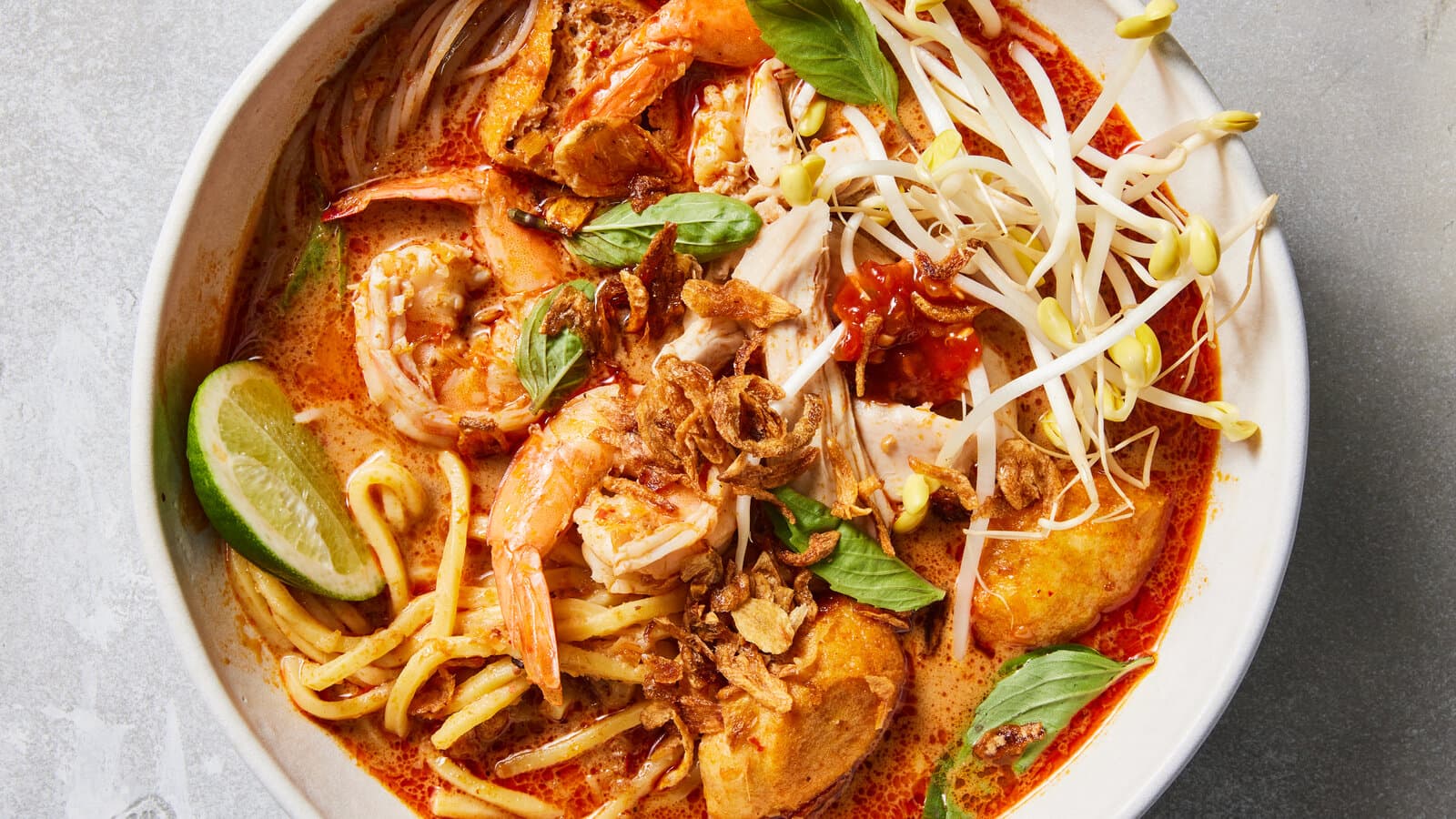 HotHalal friendly
Laksa
Singapore laksa usually refers to Katong-style laksa: coconut curry broth, rice vermicelli cut short for spoon-only eating, fish cake, cockles, and Vietnamese coriander (daun kesum). Peranakan kitchens merged Chinese noodles with Malay spices and rempah, producing a creamy, fiery bowl that encodes centuries of intermarriage and trade. Hawkers still pound paste by hand in some stalls; others guard slow-simmered broth that tastes of lemongrass, dried shrimp, and patience. UNESCO's hawker listing honours dishes like laksa where migrant histories are simmered into something unmistakably Singaporean.
Explore→