
Singapore Food Heritage
← Back to Food HeritageWanton Mee
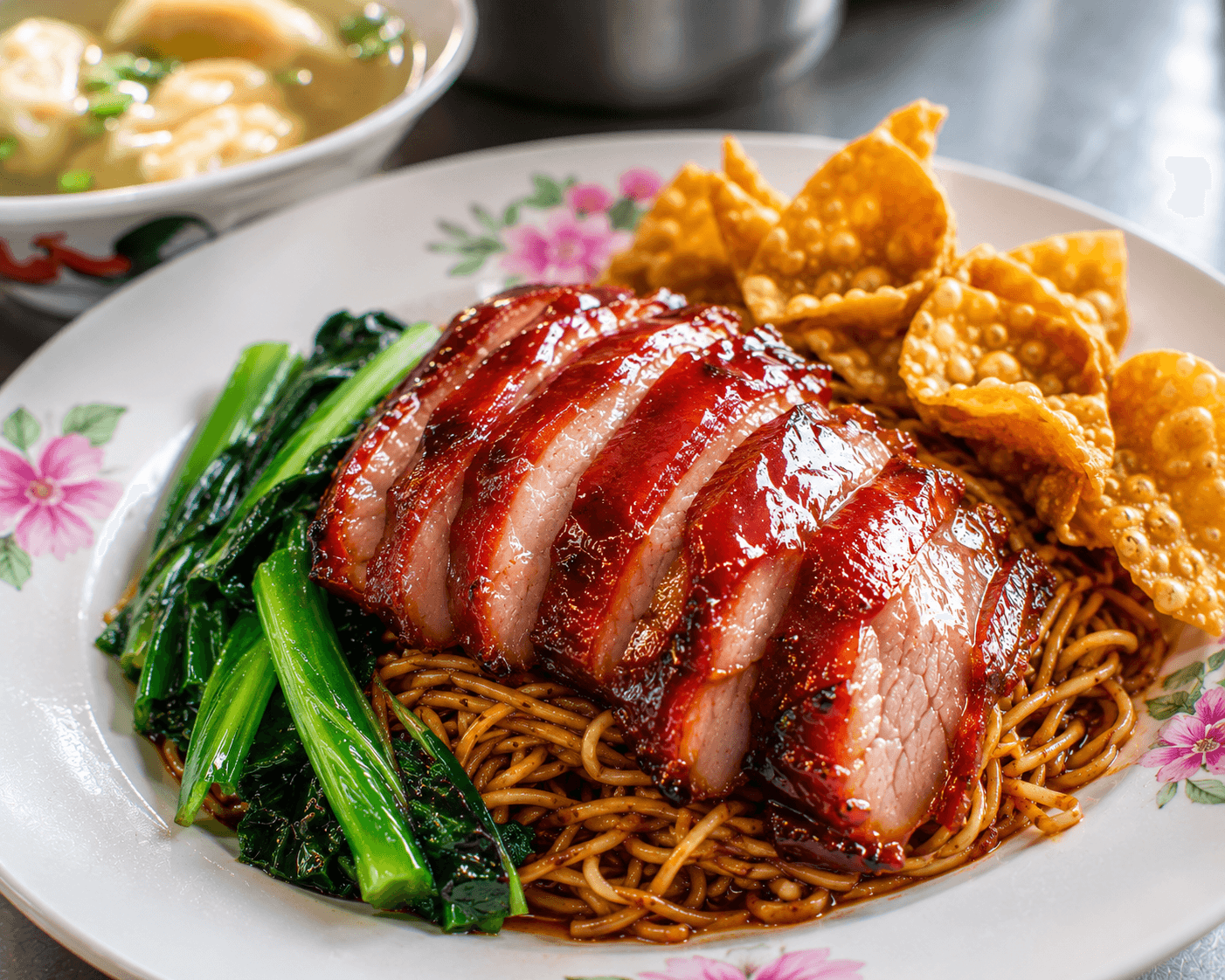
Cantonese noodle tradition brought by Guangdong immigrants — wanton mee in Singapore evolved a distinctive local char siew sauce that separates it from Hong Kong versions.
Story
Wanton mee is Singapore's most democratic noodle: available everywhere, priced for everyone, and done properly at thousands of stalls without any of them becoming famous for it.
Shiok Factor
Thin egg noodles — springy and slightly smoky from the lard — are tossed in a char siew sauce and served with char siew slices, wanton dumplings either fried or in soup, and a scattering of vegetables
It is Cantonese in origin and Singaporean in execution. The char siew is the thing to judge each stall by: properly caramelised, lacquered at the edges, never dry. A great wanton mee stall is one you find close to home and protect quietly.
🏷️ Key Ingredients
Tap any ingredient to learn its role
🥢 How to Eat Like a Local
- 1
Order dry — the sauce-tossed version shows the char siew quality better than the soup version
- 2
Mix immediately when it arrives — the sauce at the bottom of the bowl firms up quickly if left
- 3
Taste the char siew on its own first to judge the stall's technique before you mix everything together
- 4
Add chilli sauce sparingly — wanton mee has a balanced flavour profile and too much chilli dominates it
- 5
If you get soup wantons on the side, dip them into the dry noodle sauce — the combination is better than either alone
Tap each step to highlight
🌡️ Shiok-O-Meter
Rated by locals, not algorithms
Spice Hit
Like drinking warm water lah
Napkin Alert
Eat with one hand, no problem
Flavour Depth
Got layers, worth exploring
Queue Game
Walk in, sit down, eat
Shiok Value
Money well spent
Overall Shiok Score
🤷 Try First, See How
Where to Find the Best
Every hawker centre in Singapore has a wanton mee stall. The best ones are never the most famous. Find your neighbourhood uncle and stay loyal.
Best Paired With
- A bowl of wanton soup on the side
- a cup of kopi-o
- a folded newspaper. This is a breakfast ritual
- not just a meal.
Best Wanton Mee in Singapore
Locally verified — not sponsored
- 1
Hua Kee Wanton Noodle
Tanjong Pagar•Amoy Street Food Centre, #01-40, 7 Maxwell RdMichelin Bib Gourmand. The char siew here is consistently the best in the CBD — lacquered edges, tender centre, no exceptions
📍 Open in Maps - 2
Fei Fei Wanton Mee
Jurong West•Jurong West 505 Market & Food Centre, #01-29West Singapore institution — char siew roasted in-house daily. Locals have been coming since the 1980s
📍 Open in Maps - 3
Kok Kee Wonton Noodle
Jalan Besar•Lavender Food Square, 380 Jalan BesarOld-school Cantonese style with a broth that is simmered for hours. The soup wanton version here is exceptional
📍 Open in Maps
Find It At These Hawker Centres
Keep Exploring
More Singapore Heritage Dishes
 Medium
Char Kway Teow
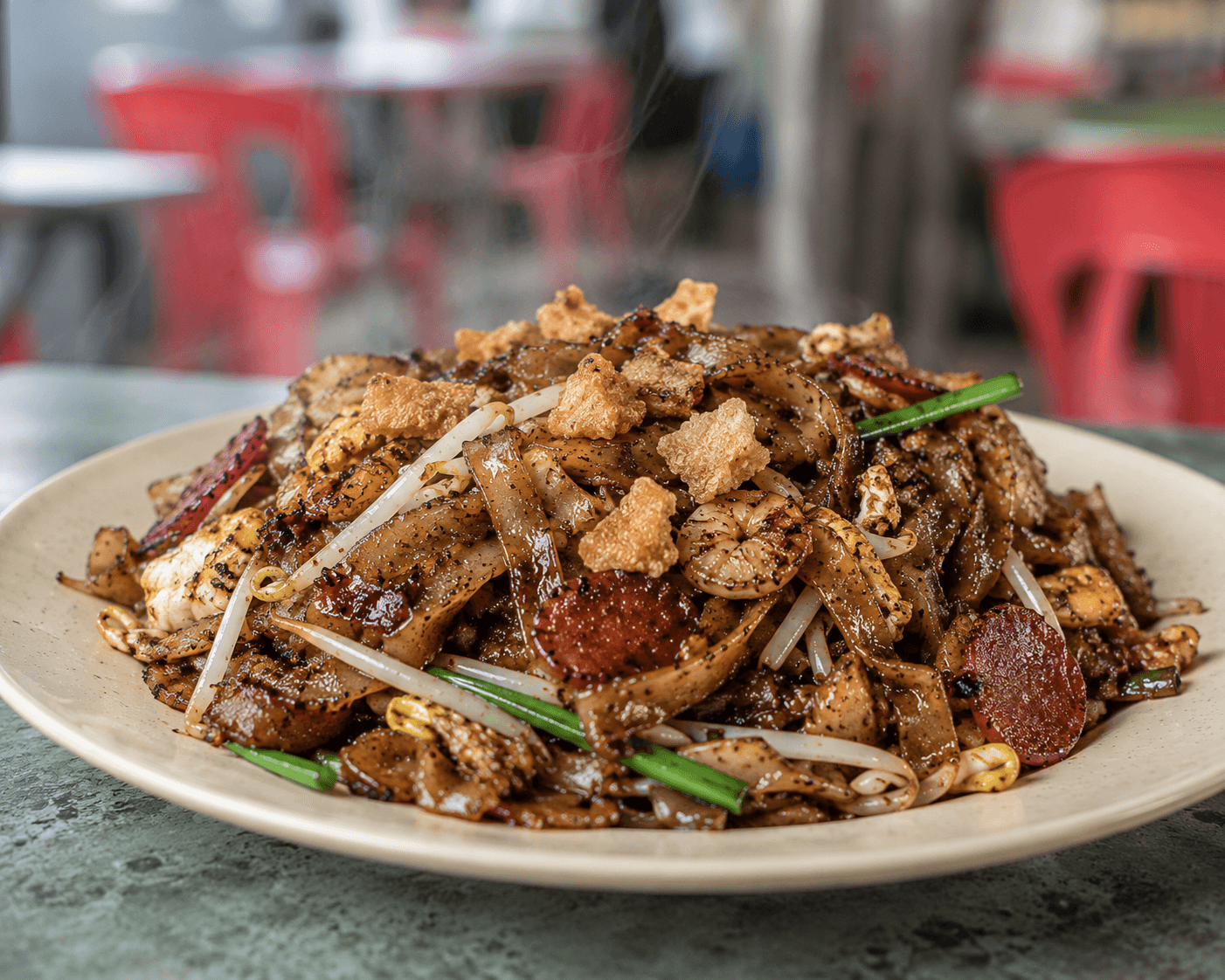
Char kway teow ("stir-fried rice cake strips") is one of Singapore's most beloved wok dishes: flat rice noodles tossed over fierce heat with dark soy, egg, bean sprouts, and seafood or lap cheong. The dish reflects the Strait Settlements era—Teochew and Hokkien traders, Southern Chinese technique, and Malaysian ingredients meeting in port cities. The hallmark is wok hei, the smoky breath of the wok that hawkers chase at dawn and supper. UNESCO's inscription of Singapore's hawker culture celebrates exactly this: affordable, skilled street cooking passed between generations. A plate of CKT is not just calories; it is living heritage on a styrofoam tray.
Explore→
 NoneHalal friendly
Hainanese Chicken Rice
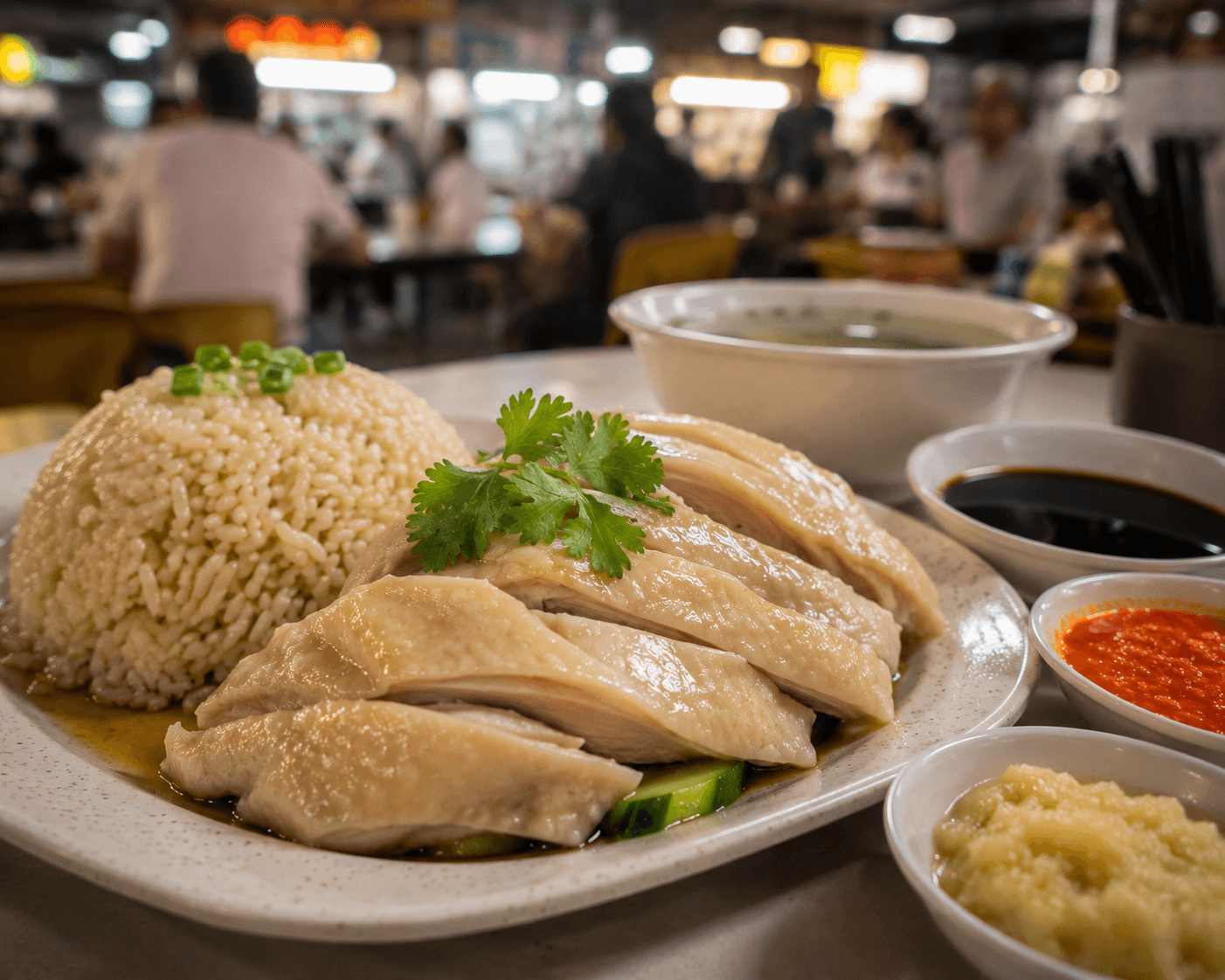
Hainanese chicken rice began with Hainanese cooks who adapted Wenchang chicken for colonial Singapore and Malaya: poached chicken, fragrant rice cooked in chicken fat and pandan, and a triumvirate of sauces—chilli, ginger, dark soy. It became the city-state's unofficial national dish because it is comforting, precise, and everywhere—from coffee shops to Michelin-listed stalls. Hawker centres guard family recipes for broth, timing of the ice bath that gives silky skin, and the exact aroma of the rice. That devotion is why chicken rice sits at the heart of Singapore's UNESCO-recognised hawker culture: technical skill, modest prices, and deep community memory.
Explore→
 HotHalal friendly
Laksa
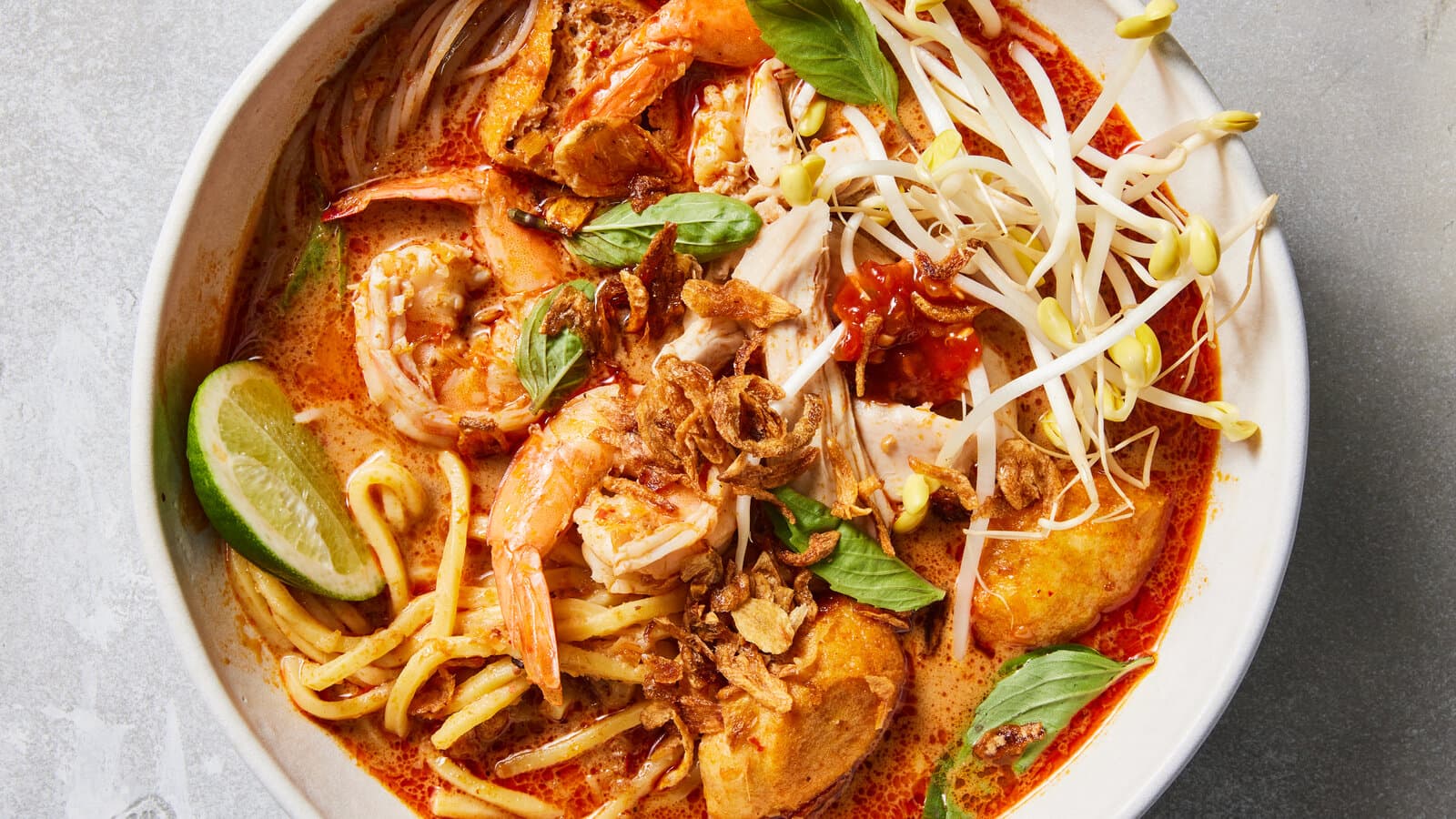
Singapore laksa usually refers to Katong-style laksa: coconut curry broth, rice vermicelli cut short for spoon-only eating, fish cake, cockles, and Vietnamese coriander (daun kesum). Peranakan kitchens merged Chinese noodles with Malay spices and rempah, producing a creamy, fiery bowl that encodes centuries of intermarriage and trade. Hawkers still pound paste by hand in some stalls; others guard slow-simmered broth that tastes of lemongrass, dried shrimp, and patience. UNESCO's hawker listing honours dishes like laksa where migrant histories are simmered into something unmistakably Singaporean.
Explore→