
Singapore Food Heritage
← Back to Food HeritageHae Mee
Hokkien hawker innovation — prawn noodles were created by using prawn shells and heads (considered waste by restaurants) to make a broth of remarkable depth and intensity.
Story
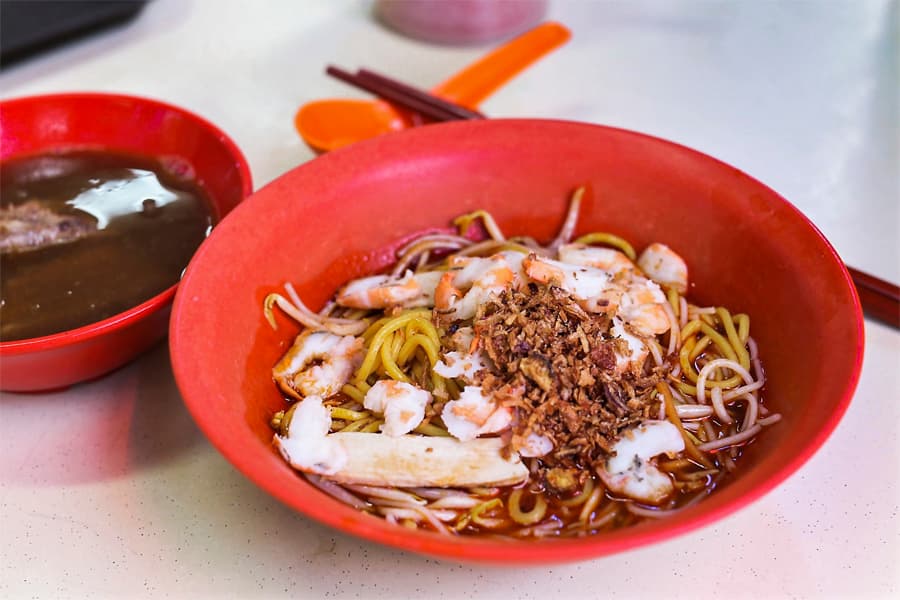
Hae mee — prawn noodles — is one of Singapore's great broth dishes: yellow egg noodles and bee hoon in a deeply reduced prawn-and-pork broth, served with prawns, pork ribs, pork slices, and crispy lard. The broth is the entire achievement.
Shiok Factor
Prawn shells and heads are roasted until caramelised, then simmered with pork bones for hours until the broth turns a deep, coral orange and tastes of concentrated prawn essence
This is Hokkien cooking at its most technically demanding. The dish was created by Hokkien hawkers who used the shells and heads that wealthier restaurants discarded to make something richer than anything those restaurants served.
🏷️ Key Ingredients
Tap any ingredient to learn its role
🥢 How to Eat Like a Local
- 1
Taste the broth first before adding anything — it should be intensely savoury and slightly sweet from the prawn
- 2
Add sambal belacan in small increments — the broth is already complex and too much sambal covers its flavour
- 3
Squeeze calamansi over the prawns rather than into the broth — it brightens the shellfish flavour specifically
- 4
Order the dry version with soup on the side if available — the dry version is more concentrated and shows the stall's sauce quality
- 5
Request extra lard crackling if offered — it adds a smoky crunch that elevates the broth dramatically
Tap each step to highlight
🌡️ Shiok-O-Meter
Rated by locals, not algorithms
Spice Hit
Like drinking warm water lah
Napkin Alert
Eat with one hand, no problem
Flavour Depth
Cannot stop eating
Queue Game
10 min wait, ok lah
Shiok Value
Money well spent
Overall Shiok Score
😌 Not Bad Not Bad
Where to Find the Best
Prawn noodles are found at hawker centres and coffee shops across Singapore, with several well-known specialists around Beach Road, Geylang, Adam Road and Zion Road. Most offer soup or dry versions with a choice of yellow noodles, bee hoon or kway teow.
Best Paired With
- Sambal belacan mixed to your heat preference
- calamansi
- extra lard if the stall offers it.
Best Hae Mee in Singapore
Checked against recent food guides — not sponsored
- 1
Zhi Wei Xian Zion Road Big Prawn Noodle
River Valley•Zion Riverside Food Centre, #01-04, 70 Zion Road, Singapore 247792Bib Gourmand stall known for its rich prawn broth; get the big prawn or pork rib prawn mee with chilli and pork lard.
📍 Open in Maps - 2
Adam Rd Noo Cheng Big Prawn Noodle
Bukit Timah•Adam Road Food Centre, #01-27, 2 Adam Road, Singapore 289876Bib Gourmand; the signature is the dry big prawn noodle in sweet-spicy sauce with a bowl of fresh prawn soup on the side. Closed Mondays.
📍 Open in Maps - 3
Jalan Sultan Prawn Mee
Geylang•2 Jalan Ayer, off Lorong 1 Geylang, Singapore 389141Bib Gourmand stall running for decades; order the dry version tossed in sambal with fried shallots, or the soup with its naturally sweet prawn broth.
📍 Open in Maps
Hae Mee: questions people ask
Where can I eat the best hae mee in Singapore?
Our picks are Zhi Wei Xian Zion Road Big Prawn Noodle (River Valley), Adam Rd Noo Cheng Big Prawn Noodle (Bukit Timah) and Jalan Sultan Prawn Mee (Geylang). Each one is checked against recent food guides; see the full list with addresses on this page.
How much does hae mee cost in Singapore?
Expect to pay about S$5–8 for a regular bowl; S$10–20+ for big or jumbo prawn versions.
Is hae mee spicy?
Only mildly. Hae mee has a gentle warmth rather than real heat.
How do you eat hae mee like a local?
Taste the broth first before adding anything — it should be intensely savoury and slightly sweet from the prawn. Add sambal belacan in small increments — the broth is already complex and too much sambal covers its flavour.
Find It At These Hawker Centres
Keep Exploring
More Singapore Heritage Dishes
 Medium
Satay Bee Hoon
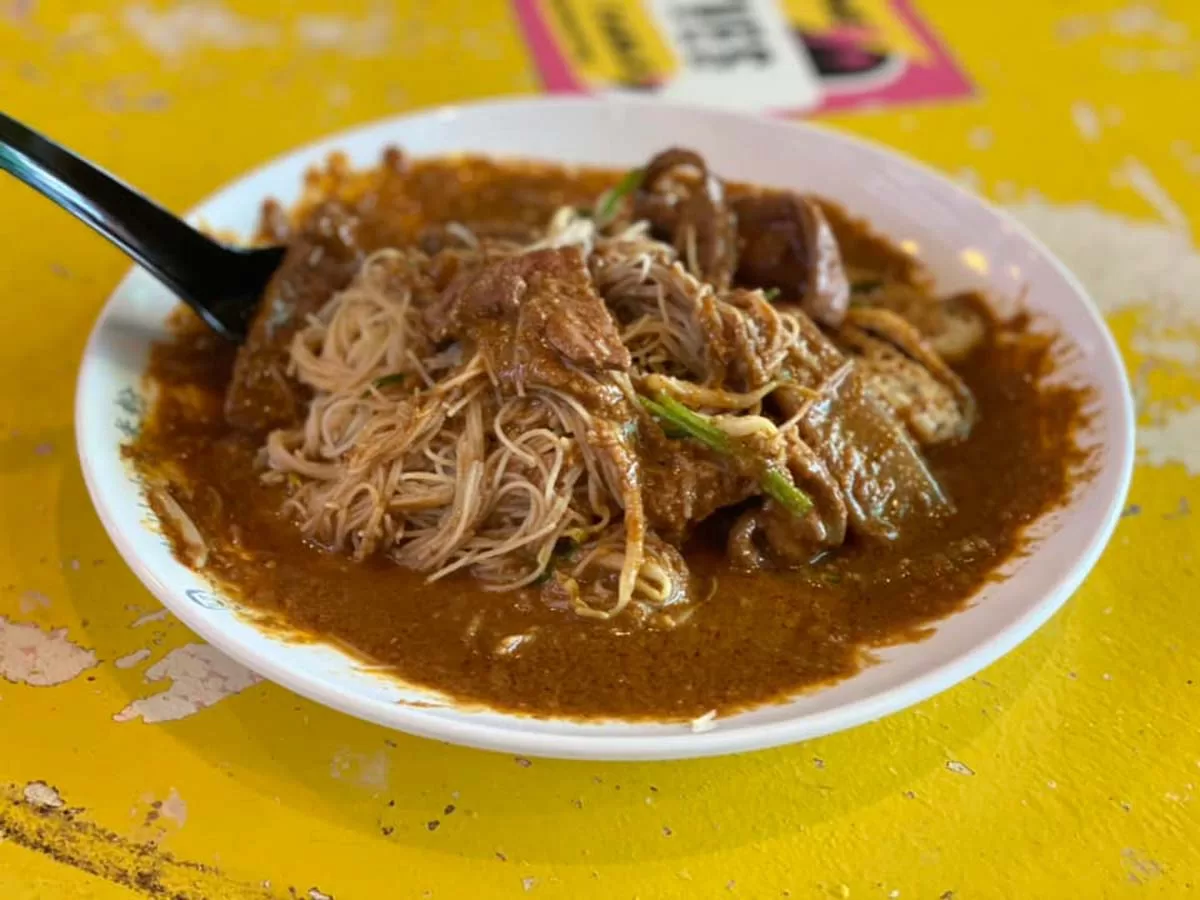
Satay bee hoon is one of Singapore's most distinctly local hawker dishes: soft rice vermicelli smothered in a thick, slightly sweet and s…
Explore→
 Mild
Bak Kut Teh
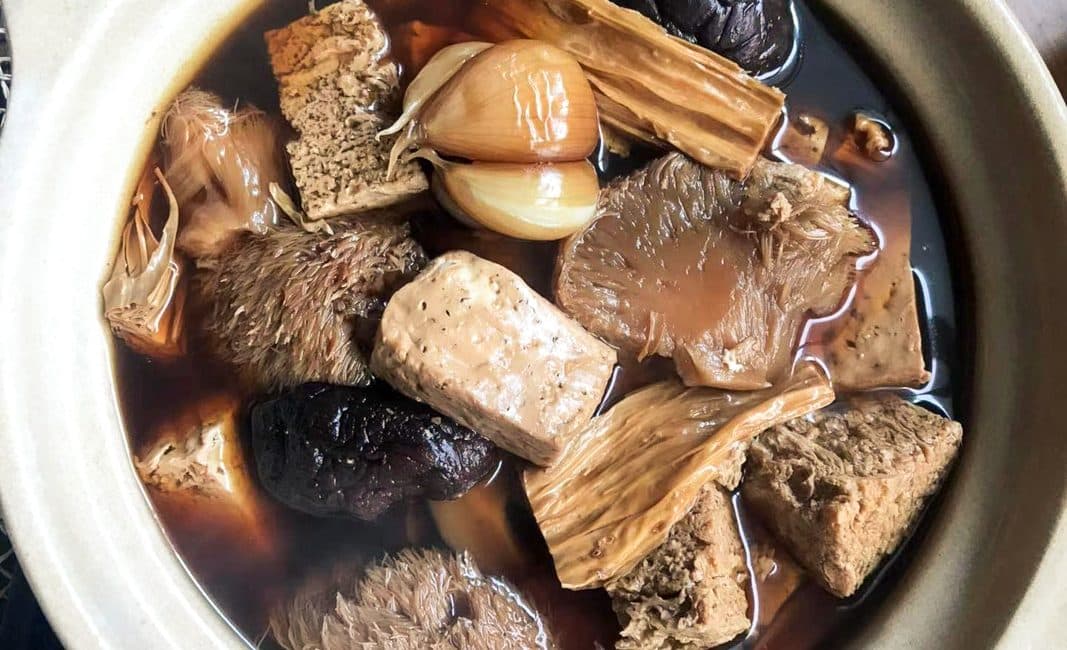
Bak kut teh (肉骨茶), Hokkien for "meat bone tea", is pork ribs simmered in broth and eaten with rice, dark soy and a pot of Chinese tea. Th…
Explore→
 Medium
Lor Mee
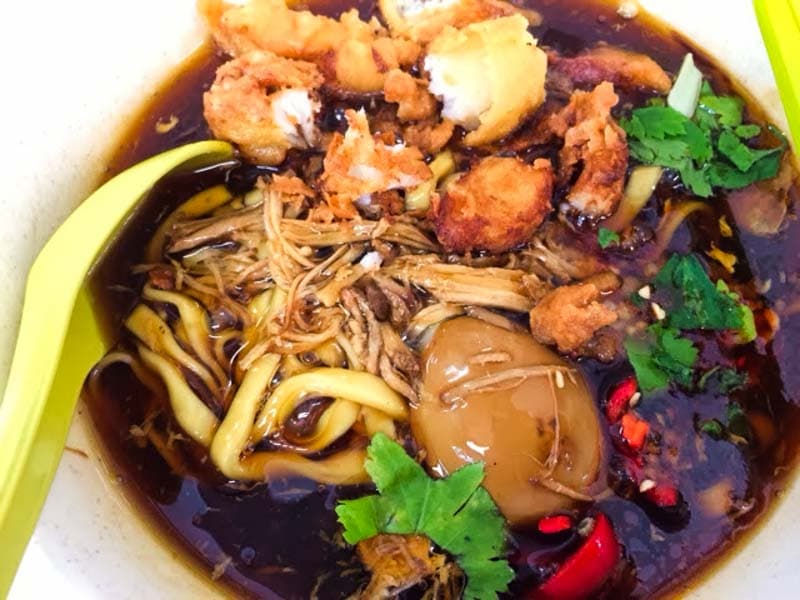
Lor mee is a Hokkien noodle dish that looks alarming and tastes extraordinary: thick, starchy gravy — thickened with cornstarch until it'…
Explore→