Singapore is one of the easiest cities in Asia to eat halal, and hawker centres are where that ease is most obvious. Malay and Indian Muslim cooking runs through the whole hawker canon, from the morning roti prata griddle to the evening satay smoke. But "halal" at a hawker centre is not one thing. It is stall by stall, and the signs on the shopfront do not all mean the same.
This guide explains how to read those signs, which hawker centres give you the most choice, and which dishes are usually safe to order. If you have never eaten at a hawker centre before, start with our first-timers guide and come back.
Certified Halal vs Muslim-Owned: What The Signs Mean
Halal certification in Singapore is issued by MUIS, the Islamic Religious Council of Singapore. It is voluntary. A stall chooses to apply, and once certified it is audited by MUIS.
Three things to know before you order:
- Certification is per stall, not per hawker centre. A hawker centre is never "halal" as a whole. A certified nasi padang stall can sit three doors from a roast pork stall.
- The certificate names the stall. The current MUIS certificate for eating establishments shows the stall's name and address, a QR code and the Mufti's signature. It may not print an expiry date. Scan the QR code and it opens a live page showing whether the certification is valid. MUIS began moving outlets to this QR-coded certificate in October 2025, with paper versions phased out by March 2026, so the QR version is what you should now expect to see.
- "No pork, no lard" is not certification. It is a description written by the stall owner. MUIS and its public education arm, HalalSG, are clear that the absence of pork does not make food halal: the chicken or beef may not be slaughtered to halal standards, and alcohol-based ingredients or shared utensils may be involved.
Then there is the large middle ground: Muslim-owned stalls. MUIS confirms that a Muslim-owned stall does not need certification, and that it does not penalise Muslim owners who say their food is halal without certifying, because keeping it halal is their own religious responsibility. Many of Singapore's most loved Malay and Indian Muslim hawkers run this way. Some display Arabic calligraphy, a Quranic verse or the word "Muslim" in the stall name instead of a certificate.
Whether you eat at a Muslim-owned but uncertified stall is a personal decision. HalalSG's own advice is "check, ask, decide": look for the certificate, ask the stallholder politely if you are unsure, then choose. Below, we mark every stall clearly as certified or Muslim-owned (not certified) based on the most recent published information we could find. Always confirm with the certificate on the day, because status can change.
Where To Eat: Hawker Centres With The Most Halal Choice
Geylang Serai Market
Geylang Serai Market is the heart of Malay Singapore, and its upstairs food centre has more Malay and Muslim stalls than anywhere else on the island. Go hungry and go before noon, when the nasi padang trays are at their fullest.
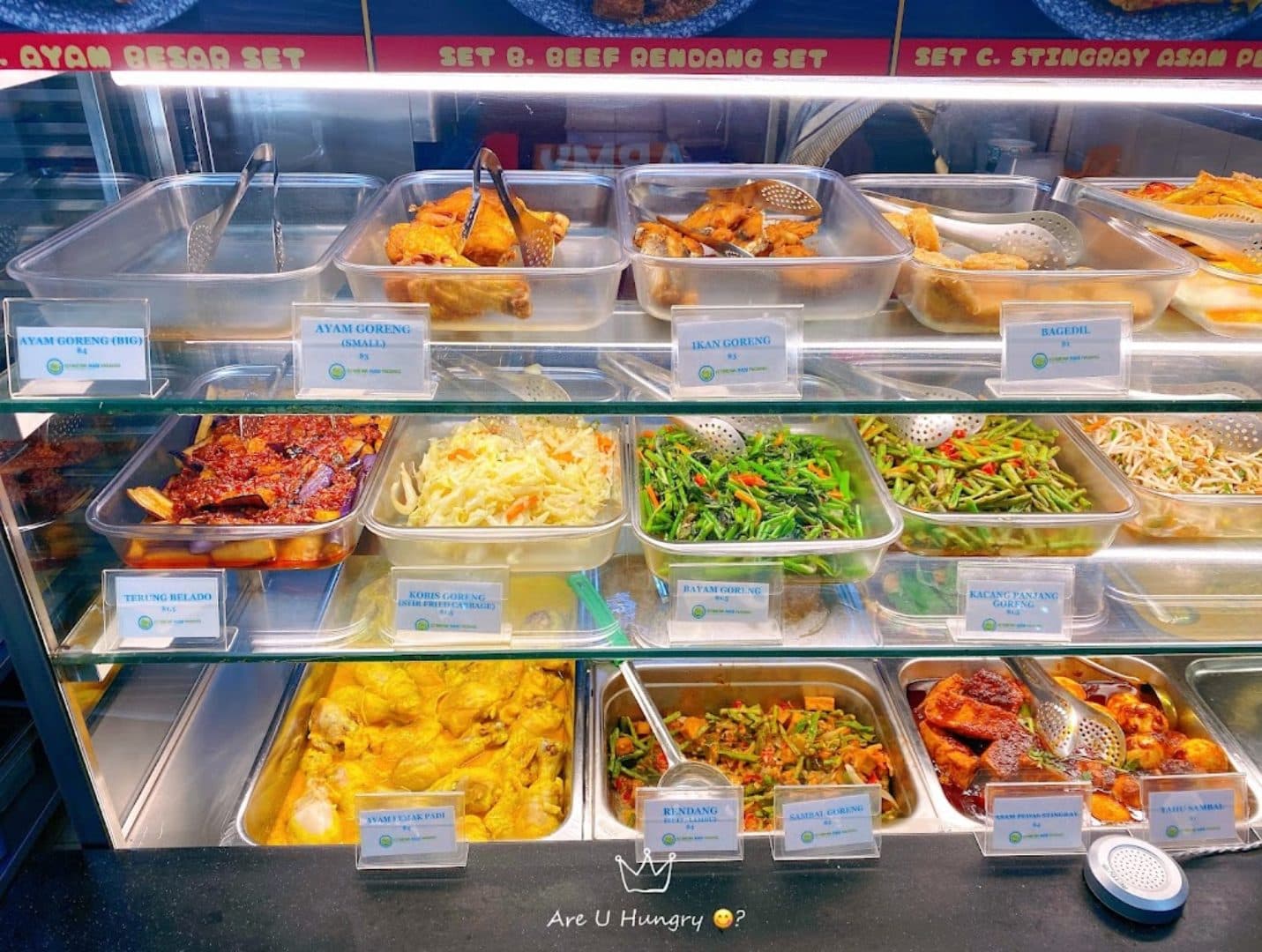
- Sinar Pagi Nasi Padang, #02-137 (certified). The obvious first stop. Point at what you want from the trays of rendang, sambal goreng and curried vegetables. Listed as open daily, 7am to 7pm.
- Geylang (Hamid's) Briyani Stall, #02-146 (Muslim-owned, not certified at last report). A family business with roots going back more than 50 years. Order the mutton biryani. Listed as closed on Mondays.
Beyond these, walk the floor for mee rebus, lontong, otak-otak and chendol. Most stalls here are Malay-run, but check each stall's signage individually.
Tekka Centre
Tekka Centre in Little India is the Indian Muslim counterpart to Geylang Serai, and the best place to eat breakfast like a Tamil Muslim uncle.
- Zam Zam Muslim Food, #01-217 (certified). Egg prata, chicken biryani and mutton curry. Open early, listed as daily from 6am. Our prata decoder will help you order.
- Temasek Indian Rojak, #01-254 (certified). Pick your fritters, tempeh and fishballs from the display; they are cut up and drowned in a sweet, spicy sauce.
- Sri Aachi Aappakadai, #01-219 (certified). Lacy, bowl-shaped appam and thosai.
- Neha Tiffin Centre, #01-274 (certified). Masala thosai, putu mayam and vadai.
- Allauddin's Briyani, #01-229 (Muslim-owned, not certified). A Tekka institution; order the mutton biryani set.
- Ar-Rahman Cafe, #01-247 (Muslim-owned, not certified). Chendol, including a durian version.
Adam Road Food Centre
Small, busy and close to the Botanic Gardens, Adam Road Food Centre packs two Michelin Bib Gourmand stalls and Singapore's most argued-about nasi lemak into one row.
- Bahrakath Mutton Soup, #01-10 (certified, Michelin Bib Gourmand 2026). Serving the same recipe since 1973. Order the mutton leg soup, a peppery, herbal sup kambing, with bread for dipping. Open late, until midnight most nights.
- Selamat Datang Warong Pak Sapari, #01-09 (Muslim-owned, certification not stated; Michelin Bib Gourmand 2026). The mee soto and mee rebus are the reason for the queue. Closed on Fridays.
- No. 1 Adam's Nasi Lemak, #01-01 (Muslim-owned, not certified). Classic nasi lemak with fried chicken wing and sambal. Listed as closed on Tuesdays.
- Selera Rasa Nasi Lemak, #01-02 (not certified, described as no pork, no lard). Famous, but treat it as a personal call for the reasons above. Closed on Fridays.
Lau Pa Sat
The Victorian cast-iron market in the CBD is the most convenient option for travellers staying in the city, and Lau Pa Sat has made a point of publicising its Muslim-friendly stalls. Note that Lau Pa Sat uses stall numbers, not #01- unit numbers.
- Warong Pak Sapari, Stall 58 (certified). Mee soto under the Warong Pak Sapari name. Unlike the Adam Road stall, this outlet is listed as certified.
- Nasi Lemak Ayam Taliwang, Stall 71 (certified). Nasi lemak with spicy Lombok-style grilled chicken. Open late.
- Hong Kong Street BBQ Live Seafood, Stalls 51 to 53 (certified). A rare chance to eat Chinese-style zi char seafood halal.
- Kopi Kiosk, Stalls 1 to 3 (certified). For your teh tarik or kopi.
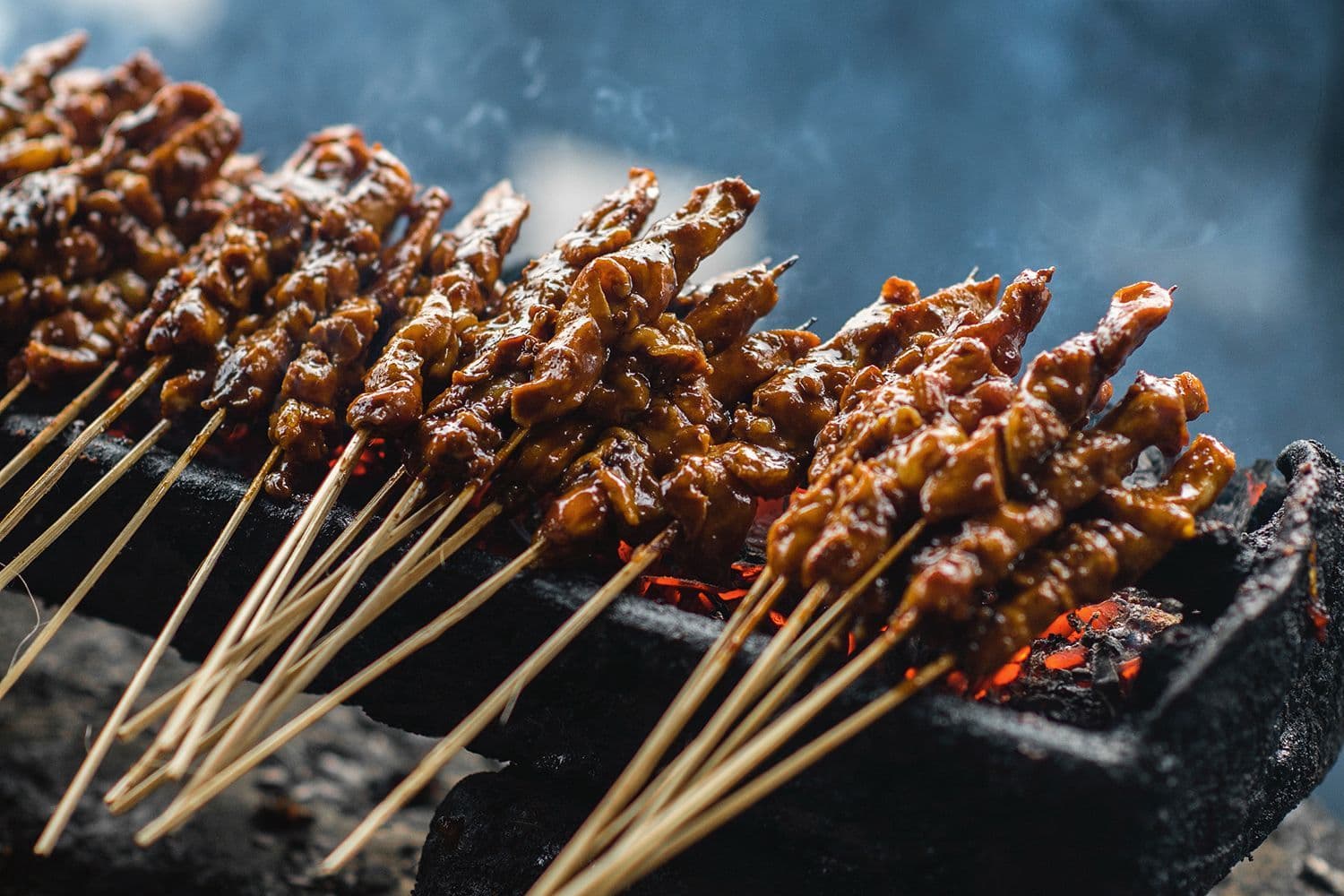
In the evenings, Boon Tat Street beside the market becomes Satay Street. Lau Pa Sat says eight of the satay stalls there are Muslim-friendly. Look for the certificate on the individual stall before ordering, as satay is also sold by Chinese stalls that grill pork.
Maxwell Food Centre
Maxwell Food Centre is mostly Chinese, but it now has two certified stalls worth knowing if you are touring Chinatown:
- Pakistani Dum Biryani, #01-69 (certified). Chicken or mutton dum biryani or pulao. Weekdays only.
- Sultan Kebab, #01-86 (certified). Turkish kebab wraps and kunefe. Closed on Fridays.
Old Airport Road Food Centre
Old Airport Road Food Centre is a local favourite but has fewer halal options. Siam Cuisine, #01-65 (certified, Muslim-owned) does Thai basil chicken and yellow curry rice, and Munchi Pancakes, #01-150 (certified) makes min jiang kueh, the folded peanut pancake. Information here dates from late 2024, so check before you make the trip.
Dishes That Are Usually Halal At Malay And Indian Muslim Stalls
Order these from a certified or Muslim-run stall and you are on familiar ground:
- Nasi padang: rice with a choice of rendang, curries and vegetables.
- Nasi lemak: coconut rice, sambal, egg, ikan bilis. At Malay stalls it is halal by tradition; at Chinese stalls it may come with luncheon meat or pork.
- Mee rebus and mee siam: noodles in a thick sweet potato gravy, or a tangy tamarind one.
- Lontong: rice cakes in a coconut vegetable curry.
- Roti prata and murtabak: Indian Muslim staples, with the murtabak stuffed with minced mutton or chicken.
- Biryani: usually mutton or chicken, with dalcha and acar on the side.
- Satay: chicken, beef or mutton at Malay stalls. Chinese satay stalls often sell pork, so check.
- Sup tulang: red, sticky mutton bone stew. Ask for a straw for the marrow.
- Teh tarik and bandung: from the Muslim drinks stall, if there is one.
Dishes To Be Careful With
These are classic hawker dishes, but the standard versions are not halal. Halal versions exist at some certified stalls, so the rule is: only from a certified stall.
- Hainanese chicken rice: the chicken is usually not halal-slaughtered and the stall may also sell roast pork.
- Char kway teow: traditionally fried in lard with Chinese sausage.
- Wanton mee: char siu is roast pork and the dumplings are pork.
- Bak kut teh: the name means "meat bone tea" and the meat is pork ribs.
- Hokkien mee: pork stock, pork belly and lard croutons are common.
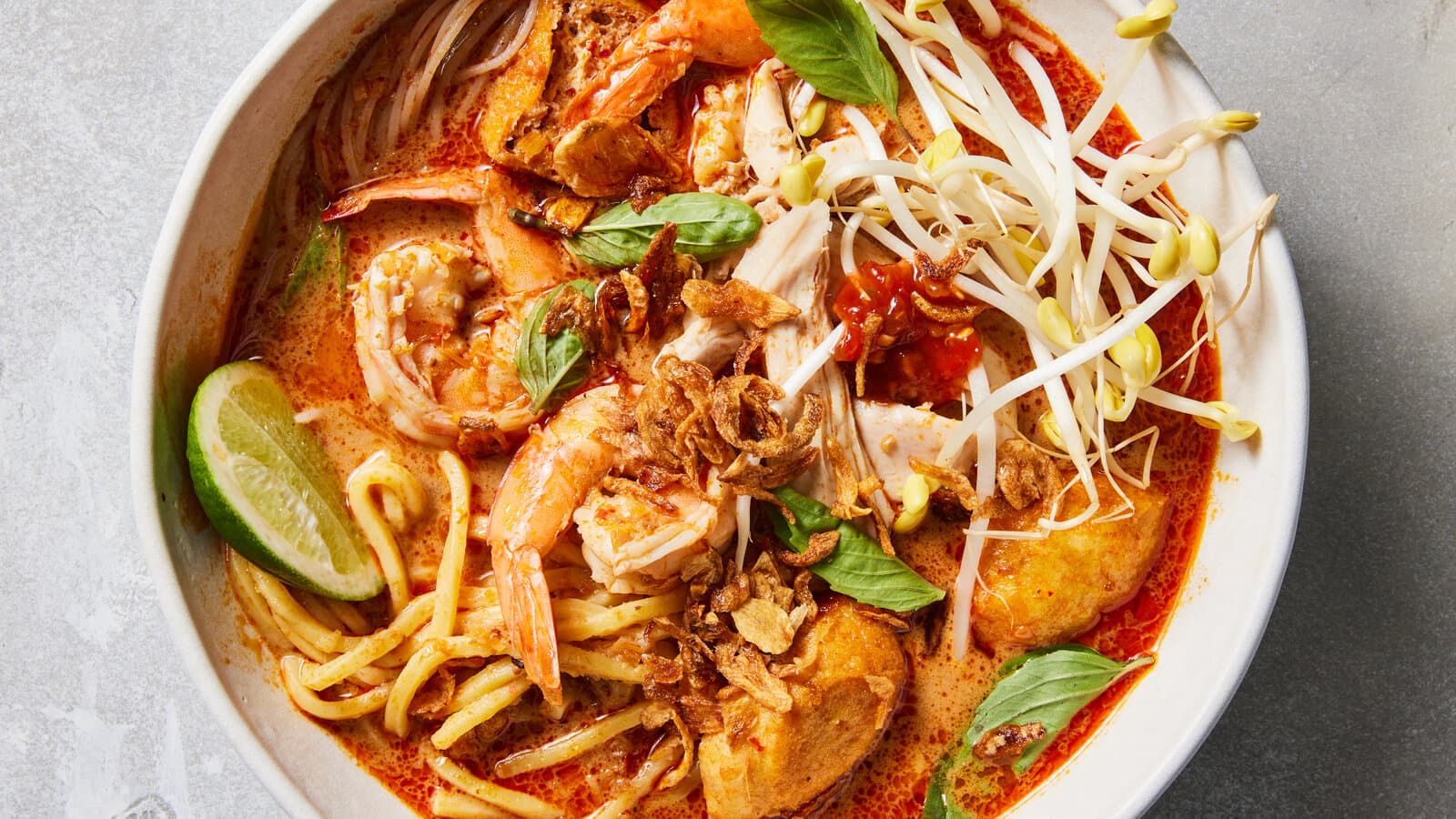
- Laksa: no pork in the bowl usually, but most stalls are uncertified and the stock and kitchen are not halal-controlled.
- Yong tau foo: many fillings use minced pork.
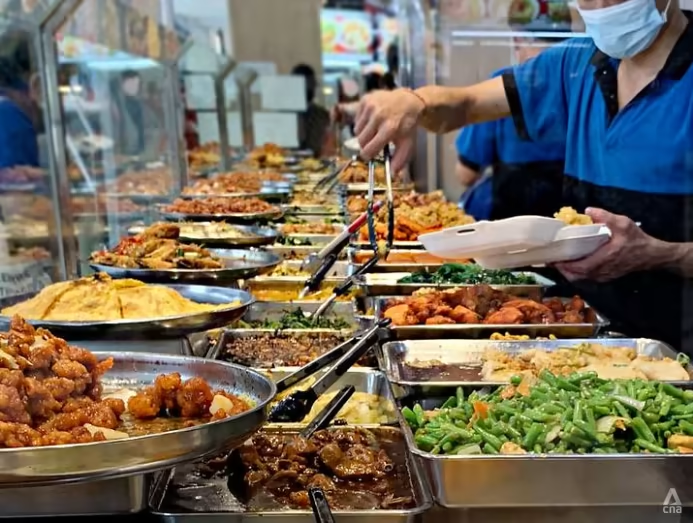
- Economy rice: mixed dishes at Chinese stalls nearly always include pork.
The Halal Tray Return Point
Every hawker centre has a tray return station, and most have a separate, labelled point for halal trays and crockery. Halal trays are often green. MUIS rules require crockery from certified stalls to be washed separately, so the system only works if diners sort correctly.
What this means for you:
- Return your tray to the point that matches the stall you ate from, not the one nearest your table.
- If you eat non-halal food with Muslim friends, never put your tray or bowl on the halal rack.
- Clearing your own tray and crockery is mandatory at hawker centres, and NEA can fine diners who leave them behind. More in our etiquette guide.
Ramadan, Friday Prayers And Mosques Nearby
Ramadan. During the fasting month many Malay and Indian Muslim stalls change hours, with some opening only for the late afternoon buka puasa (breaking fast) rush. The big event is the bazaar around Wisma Geylang Serai: in 2026 it ran from 14 February to 21 March, daily from 10am to 11:59pm. Organisers describe the food as halal-certified or Muslim-friendly, but bazaar stalls follow the same rule: look for the short-term certificate on each stall. Try bubur lambuk, the spiced rice porridge given out by mosques at sunset. Ramadan in 2027 is expected to begin in early February; exact dates depend on the moon sighting, so check closer to the time.
Friday prayers. Zuhur in Singapore falls around 1pm, and on Fridays many Muslim stallholders close or pause for congregational prayers. Some stalls simply close all of Friday: Selamat Datang Warong Pak Sapari, Selera Rasa and Sultan Kebab all do. Eat early or late on Fridays.
Mosques nearby. If you want to pray before or after eating:
- Near Tekka Centre: Masjid Abdul Gafoor on Dunlop Street, a few minutes' walk.
- Near Maxwell and Lau Pa Sat: Masjid Jamae (Chulia) on South Bridge Road and Masjid Al-Abrar on Telok Ayer Street.
- In Kampong Glam: Sultan Mosque on Muscat Street, surrounded by Muslim restaurants. These are restaurants rather than hawker stalls, but the street is worth a walk after Tekka.
Before You Go
- Hawker centres close for a few days of NEA cleaning every quarter. Each of our hawker centre pages shows the next closure, so check before you go.
- Most plates at these stalls cost roughly S$4 to S$9. Bring small notes; PayNow is common.
- Staying near the bay? Our Marina Bay Sands hawker guide covers Lau Pa Sat, Maxwell and more, and our 3-day food itinerary plans every meal. Unsure where you are? Our near me page finds the closest hawker centre, and the hawker guide covers how to order.
The short version: look for the QR-coded MUIS certificate on the stall itself, treat "no pork, no lard" as a description rather than a guarantee, and return your green tray to the halal rack. Then go and eat.