Katong and Joo Chiat are where Singapore's Peranakan story is still told through food. The pastel shophouses get the photographs, but the reason locals drive across the island is in the bowls: laksa eaten with a spoon, rice dumplings wrapped in bamboo leaves, a black nut that takes days to prepare, and toast that has been made the same way for a century.
This guide is organised by craving. Find the dish you want, then the place to eat it. If you would rather follow a walking route, our Katong flavour trail strings the key stops together in a single morning. New to hawker food altogether? Start with our first-timer's guide to hawker centres.
A quick word on who the Peranakans are. They are the descendants of Chinese traders who settled in the Malay world centuries ago and married into local communities. Their cooking, often called Nyonya food, blends Chinese technique with Malay spice: tamarind, galangal, candlenut, belacan and a lot of patience. Katong became a Peranakan heartland in the early 20th century, and the kitchens followed.
Short on time? A guided Joo Chiat and Katong food tour covers kueh, Peranakan shophouses and Katong laksa in a three-hour morning, from about US$75. More details at the end of this guide.
What to eat in Katong and Joo Chiat
Katong laksa
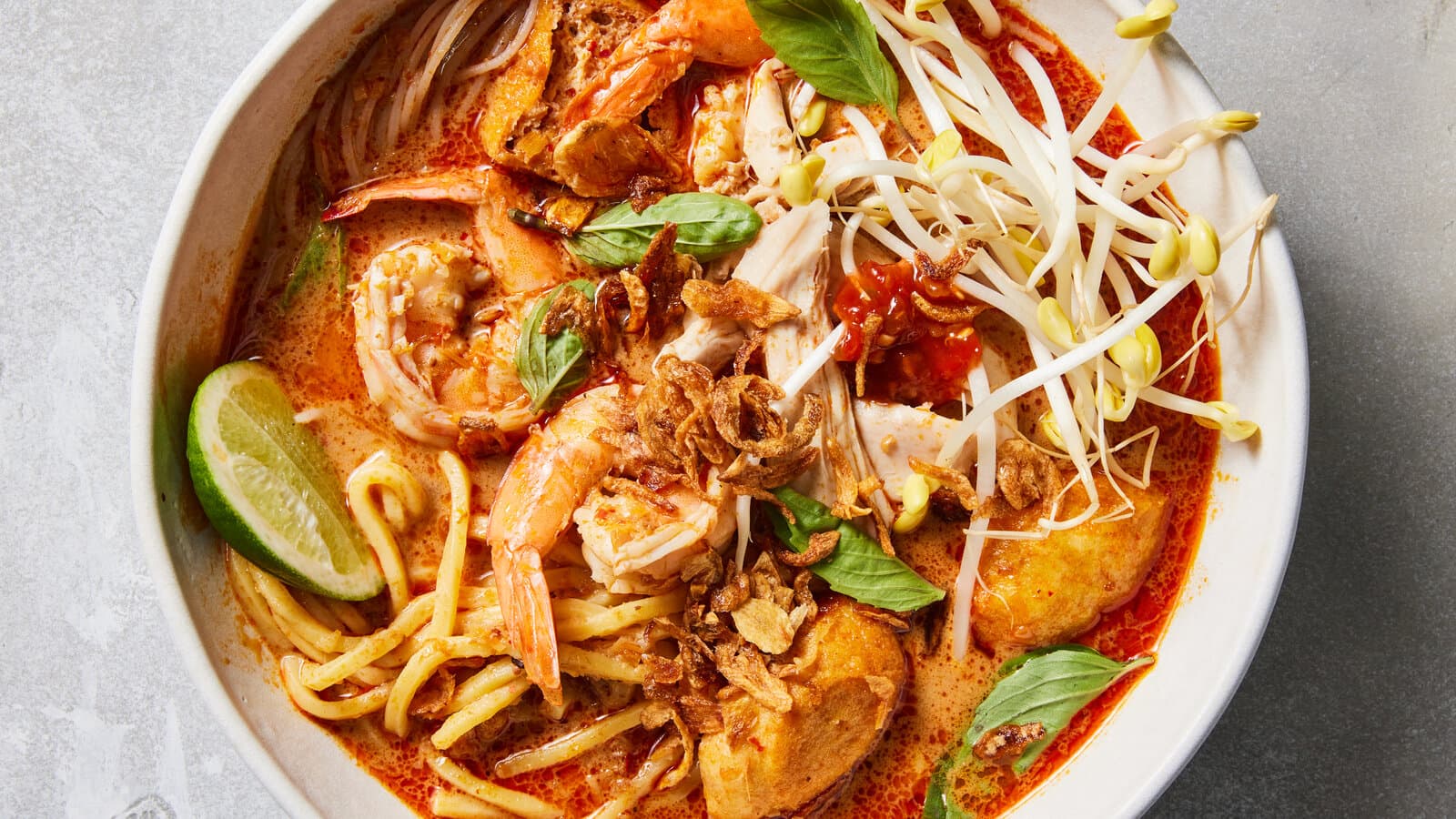
What it is: Katong's version of laksa is a rich, coconut-heavy curry broth with prawns, cockles and fish cake. The rice noodles are cut short so you eat the whole bowl with a spoon. No chopsticks needed.
Where to eat it:
- 328 Katong Laksa, 51 East Coast Road. The most famous name on the street, and the stall that beat Gordon Ramsay in the 2013 Hawker Heroes Challenge. Open daily, roughly 9.30am to 9.30pm. It is about an eight-minute walk from Marine Parade MRT (Thomson-East Coast Line).
- Janggut Laksa, Roxy Square, 50 East Coast Road, #01-64. Practically across the road from 328. Janggut claims to be the original Katong laksa: the family's earlier stall, Marine Parade Laksa, ran on this stretch for decades before 328 took over the spot in 1978. Janggut's main outlet is now at Queensway Shopping Centre, but the Roxy Square stall keeps the Katong link. Open daily, 10.30am to 4.30pm.
Tip: Do the comparison yourself. Order a small bowl at each, ten minutes apart. The "laksa wars" have never been settled and the history is genuinely contested, so trust your own spoon.
Ayam buah keluak
What it is: The dish Peranakan families judge each other by. Ayam buah keluak is chicken braised in a tamarind gravy with the black buah keluak nut, which is toxic when raw and must be soaked and buried for days before cooking. You dig out the inky, earthy paste inside with a small spoon. It tastes like nothing else in Singapore.
Where to eat it:
- Chilli Padi Nonya Restaurant, 11 Joo Chiat Place, #01-03. Casual, family-friendly and reasonably priced for a sit-down Peranakan meal. Their ayam buah keluak is a reliable first taste, and the claypot buah keluak fried rice is worth sharing. Open daily for lunch (11.30am to 2.30pm) and dinner (from 5.30pm).
- Guan Hoe Soon Restaurant, 200 Joo Chiat Road, #01-01. Founded in 1953 and widely described as Singapore's oldest Peranakan restaurant. Ayam buah keluak is one of its signatures. Open daily for lunch (11am to 3pm) and dinner (from 5pm or 5.30pm).
Tip: Ask for an extra spoon or a small fork to scrape out the nut. Eat it with plain white rice so the gravy has somewhere to go.
Babi pongteh and ngoh hiang
What it is: Babi pongteh is pork belly braised slowly with fermented soybean paste, gula melaka and shallots until it falls apart. It is sweet, salty and deeply comforting. Ngoh hiang is a five-spice pork and prawn roll wrapped in beancurd skin and fried until crisp.
Where to eat it:
- Guan Hoe Soon Restaurant (above) serves both, along with nonya chap chye (braised cabbage) and assam fish head curry.
Tip: Peranakan food is built for sharing. Two people should order three dishes plus rice: one braise, one vegetable, one fried item.
Kueh pie tee and Nyonya kueh
What it is: Kueh pie tee are crisp, top-hat shaped pastry cups filled with shredded braised turnip and topped with prawn and chilli. Nyonya kueh are the steamed, coconut-and-pandan sweets that fill Peranakan tea tables: think ondeh-ondeh bursting with gula melaka, and the many-layered kueh lapis.
Where to eat it:
- Kim Choo Kueh Chang, 60 Joo Chiat Place, with a second shop on East Coast Road. A family business dating back to the 1940s, selling Nyonya kueh alongside its famous dumplings. Both shops are open daily, 9am to 9pm. They also run kueh-making workshops and tours if you want to go deeper.
- For kueh pie tee as a starter, check the menus at the Peranakan restaurants above. It is a classic appetiser, but availability varies, so ask on the day.
Tip: Nyonya kueh are best eaten the day they are made. Buy a small mixed box in the morning and eat it in the afternoon, not the next day.
Bak chang (rice dumplings)
What it is: Bak chang are pyramid-shaped glutinous rice dumplings wrapped in bamboo leaves. The Nyonya version, kueh chang, is sweeter and more fragrant, with candied winter melon, spiced pork and a blue tint from butterfly pea flower, wrapped in pandan.
Where to eat it:
- Kim Choo Kueh Chang (above) is the name in Katong. They sell traditional bak chang, Nyonya kueh chang, mini bite-sized dumplings and vegetarian options year-round.
Tip: Dumplings travel well. A couple of Nyonya kueh chang make a good snack for the airport, but check your destination's food import rules before packing meat.
Soon kueh
What it is: Soon kueh is a Teochew dumpling with a translucent, chewy skin wrapped around stir-fried jicama, dried shrimp and mushroom. Eaten with dark sweet sauce and chilli, it is one of the best-value snacks in the east.
Where to eat it:
- Ah Yee's Soon Kueh, 124 Tembeling Road. The stall began at Dunman Food Centre, closed in 2012, and was revived by the founder's son at this Joo Chiat shophouse in 2017. Everything is made by hand daily: soon kueh, png kueh, ku chye kueh and yam cake. Open 7am to 5pm, closed Wednesdays.
Tip: Order a mix of three or four kueh and ask for them pan-fried if the option is offered. Go before lunch for the widest choice.
Kaya toast
What it is: Kaya toast is the Hainanese kopitiam breakfast: toasted bread, a cold slab of butter and kaya, the sweet coconut and egg jam scented with pandan. Served with soft-boiled eggs and strong kopi.
Where to eat it:
- Chin Mee Chin Confectionery, 204 East Coast Road. Open since 1925, closed in 2018 and revived in 2022 under new operators. The old shopfront and marble-top tables remain. It opens at 8am daily, and a second outlet opened at NEX in 2026, but the Katong original is the one to visit.
Tip: Not sure how to order your coffee? Our kopi decoder explains kopi C, kopi O and the rest. Crack the soft-boiled eggs into the saucer, then add dark soy and white pepper.
Roti prata
What it is: Roti prata is the flaky, griddled flatbread of Singapore's Indian Muslim kitchens, torn by hand and dipped in curry.
Where to eat it:
- Mr & Mrs Mohgan's Super Crispy Roti Prata, inside Tin Yeang Restaurant, 300 Joo Chiat Road. Mr Mohgan passed away in 2022, and Mrs Mohgan and the family keep the griddle going. The prata is known for its shattering crispness. Opens at 6.30am and closes early afternoon, closed Wednesdays. Note that the stall is not halal-certified.
Tip: Order one plain prata first. If it is as good as everyone says, order the coin prata. Use our prata decoder or how to order roti prata guide before you queue. Arrive early: it sells out.
Wanton mee at Dunman Food Centre
What it is: Wanton mee is springy egg noodles tossed in a light sauce with char siew and dumplings. Not a Peranakan dish, but a Joo Chiat neighbourhood staple.
Where to eat it:
- Dunman Road Char Siew Wan Ton Mee and Joo Chiat Ah Huat Wanton Noodle, both at Dunman Food Centre, 271 Onan Road. The two stalls have been the subject of a long-running local debate over which is better. Plates start from about S$4.
Tip: Order dry (tossed) with chilli. That is how most regulars eat it.
Where to eat: the hawker centres
Dunman Food Centre, 271 Onan Road, is the Joo Chiat neighbourhood hawker centre: two floors, few tourists, and a good spread of wanton mee, rojak, vadai and popiah. Come for breakfast or an early lunch.
[Marine Parade Central Market and Food Centre](/hawker/marine-parade-food-centre), 84 Marine Parade Central, was recently revamped and sits a few minutes' walk from Marine Parade MRT. Expect nasi lemak, nasi padang, char kway teow and dim sum, with halal stalls among them.
[Old Airport Road Food Centre](/hawker/old-airport-road-food-centre), 51 Old Airport Road, is a short ride north and one of the best hawker centres in Singapore. If you have an extra meal to spare, spend it here.
[East Coast Lagoon Food Village](/hawker/east-coast-lagoon-food-village), on the beachfront at East Coast Park, is the evening option for satay and seafood after a walk or cycle along the coast.
Practical tips
- Getting there: The Thomson-East Coast Line, extended in 2024, put Katong within reach of the city. Marine Parade, Katong Park and Tanjong Katong stations all serve the area. For the northern end of Joo Chiat Road, Eunos (East-West Line) and Paya Lebar are useful.
- Go early: Mohgan's, Ah Yee's and Chin Mee Chin are morning places. Start by 8.30am and do the laksa and kueh later in the day.
- Closed days: Wednesday is a common rest day here. Mohgan's and Ah Yee's both close on Wednesdays.
- Halal: Much Peranakan cooking uses pork, and most stalls in this guide are not halal-certified. For Muslim-friendly options, see our halal hawker food guide.
- Money: Most hawker plates cost S$4 to S$7. Peranakan restaurants are sit-down affairs, so budget roughly S$25 to S$40 a head. Carry some cash for small stalls, though PayNow and cards are increasingly accepted.
- Manners: Chope your seat with a tissue packet and return your tray. Our hawker etiquette guide covers the rest.
- Hours change: Opening times in this guide were checked against 2025 and 2026 sources, but small family businesses adjust them often. Check on the day before you travel across the island for one dish.
Prefer a guided tour?
A guide adds the stories behind the shophouses and the Peranakan families, and takes the planning off your hands, which suits first-time visitors and anyone short on time. The Joo Chiat and Katong food tour below runs for about three hours on a morning, meets at Dunman Food Centre on Onan Road, takes groups of up to 16 (minimum four) and starts from about US$74.55, though prices change and the listing says bookings are non-refundable. We have not taken this tour ourselves (affiliate link: we may earn a small commission).
For other guided options across the island, see our round-up of the best Singapore food tours.